 Aroma Tranquility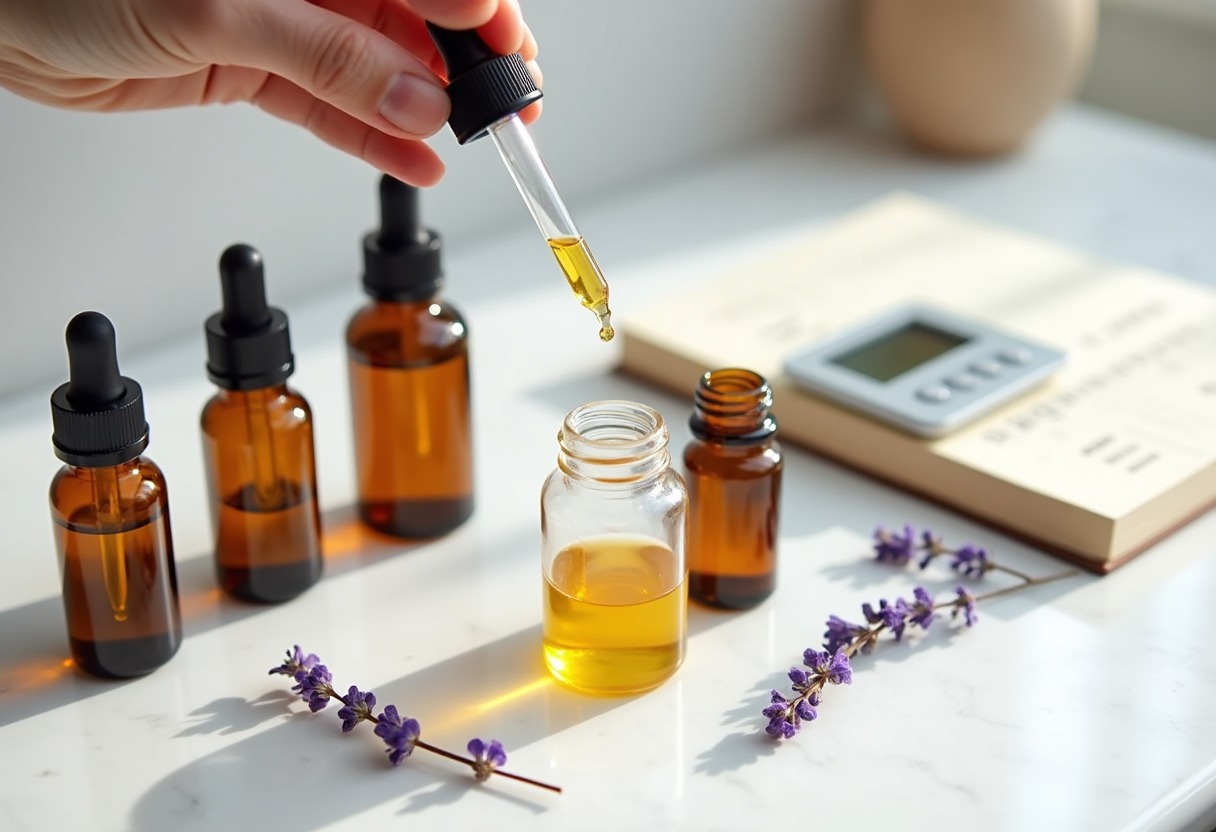
Most aromatherapy accidents happen because someone used undiluted essential oils directly on skin or mixed concentrations far too strong for their intended purpose. Getting dilution ratios right means the difference between therapeutic benefit and chemical burns, between subtle wellness support and overwhelming sensory assault.
Why Essential Oil Concentration Matters More Than Quality
Pure essential oils contain volatile compounds at concentrations 50 to 100 times stronger than what exists in the original plant material. A single drop of peppermint oil equals roughly 28 cups of peppermint tea in terms of active compounds. This intensity explains why undiluted essential oils can cause contact dermatitis, skin sensitization, and even systemic toxicity when used improperly.
The therapeutic window for essential oils — where they provide benefits without adverse effects — depends entirely on proper dilution. Too weak, and you miss the intended effect. Too strong, and you risk irritation or worse. Professional aromatherapists calculate dilutions by weight or drop count because precision matters when working with concentrated plant extracts.
Different applications require dramatically different concentration levels. What works safely in a diffuser will burn your skin. What feels gentle as a massage oil might trigger headaches if you try breathing it directly from the bottle.
Understanding Dilution Percentages and Ratios
Essential oil dilution ratios express the relationship between pure essential oil and carrier medium, typically shown as percentages. A 1% dilution means 1 part essential oil to 99 parts carrier — whether that carrier is a [vegetable oil for topical use](Essential Oil Carrier Oils Guide) or water for room sprays.
For topical applications, calculate dilutions using drops per tablespoon of carrier oil. One tablespoon equals approximately 300 drops of carrier oil, making math straightforward:
- 0.5% dilution: 1-2 drops per tablespoon carrier oil (children, elderly, sensitive skin)
- 1% dilution: 3 drops per tablespoon carrier oil (daily adult use)
- 2% dilution: 6 drops per tablespoon carrier oil (acute situations, short-term use)
- 3% dilution: 9 drops per tablespoon carrier oil (sports applications, very limited use)
Many beginners confuse dilution ratios with blend ratios. A 50:50 blend of lavender and chamomile oils still requires dilution in a carrier before skin application. The blend ratio affects scent profile; the dilution ratio affects safety.
→ Shop essential oil dropper bottles on Amazon for precise measuring when creating your dilutions.
Application-Specific Concentration Guidelines
Different aromatherapy methods require specific concentration ranges for both safety and effectiveness. Exceeding these guidelines doesn't increase benefits — it increases risks.
Topical Application Concentrations: Most skin applications should stay between 0.5% and 2% dilution. Facial products require the lowest concentrations (0.25% to 0.5%), while body oils can handle slightly higher percentages. Problem areas like feet can sometimes tolerate 3% dilutions for short periods, but this should be exception rather than rule.
Diffuser Concentrations: Ultrasonic diffusers work effectively with 3-5 drops of essential oil per 100ml of water. Nebulizing diffusers require no dilution since they don't use water, but run them for shorter periods (15-30 minutes) to avoid overwhelming indoor air quality. Reed diffusers typically use 10-20% essential oil concentration in the carrier oil mixture.
Bath and Body Product Concentrations: Bath salts can handle 1-2% essential oil concentrations when properly dispersed with salts or milk. Direct oil-to-water addition creates uneven distribution and potential skin irritation. Body lotions and creams typically contain 0.5-1% essential oil content for daily use products.
When [blending essential oils](How To Blend Essential Oils Guide) for any application, calculate total essential oil percentage, not individual oil percentages. Three different oils at 1% each creates a 3% total concentration.
Dilution Ratio Comparison Chart
| Application Type | Safe Concentration | Drops per 1 oz Carrier | Usage Notes | |---|---|---|---| | Children (2-12 years) | 0.25-0.5% | 2-4 drops | Always patch test first | | Adult facial care | 0.5-1% | 4-8 drops | Avoid eye area completely | | Adult body massage | 1-2% | 8-16 drops | Most versatile range | | Acute/therapeutic use | 2-3% | 16-24 drops | Short-term use only | | Cleaning products | 1-5% | 8-40 drops | Well-ventilated areas | | Room sprays | 0.5-2% | 4-16 drops per 4oz water | Shake before each use |
These percentages represent maximum safe concentrations. Starting at the lower end of each range allows you to assess individual tolerance before increasing strength. Some essential oils, particularly citrus and spice oils, require lower concentrations regardless of application method.
→ Shop measuring pipettes aromatherapy on Amazon for accurate measurements when working with these specific ratios.
Essential Oil-Specific Dilution Requirements
Different essential oils have varying potency levels and safety profiles that affect appropriate dilution ratios. Hot oils like cinnamon, clove, oregano, and thyme require maximum 0.5% dilution for topical use — sometimes less. These oils can cause chemical burns even at seemingly low concentrations.
Citrus oils present unique challenges due to their phototoxic properties. Bergamot, lemon, lime, and grapefruit oils increase UV sensitivity when applied to skin, requiring both lower dilution rates and sun avoidance for 12-24 hours after application.
Gentle oils like [lavender](The 7 Best Lavender Essential Oils), chamomile, and sandalwood tolerate higher dilution percentages, but this doesn't mean they're always safe undiluted. Even mild oils can cause sensitization with repeated undiluted exposure.
High-Caution Oils (Maximum 0.5% dilution):
- Cinnamon bark and leaf
- Clove bud
- Oregano
- Thyme
- Wintergreen
- Birch
Moderate-Caution Oils (Maximum 1-2% dilution):
- Peppermint
- Eucalyptus
- Tea tree
- Rosemary
- Lemongrass
Gentle Oils (Up to 2-3% dilution possible):
- Lavender
- Chamomile
- Sandalwood
- Geranium
- Ylang ylang
→ Shop carrier oil bottles on Amazon to properly store your diluted blends and maintain their potency.
Professional Dilution Techniques and Measuring Methods
Accurate measuring separates safe aromatherapy practice from guesswork. Professional aromatherapists use weight-based measurements (grams and milligrams) rather than volume-based drops because drop size varies between different essential oils and dropper types.
For home use, standardize your measuring by using the same dropper bottles for all essential oils. → Shop essential oil dilution bottles on Amazon with consistent dropper openings to maintain measurement accuracy across different oil viscosities.
Weight-Based Dilution Formula: (Desired percentage ÷ 100) × Total blend weight = Essential oil weight needed
For a 1% dilution in 30ml (approximately 30g) of carrier oil: (1 ÷ 100) × 30g = 0.3g essential oil needed
Volume-Based Quick Reference:
- 1% in 1 ounce carrier = 8-10 drops essential oil
- 2% in 1 ounce carrier = 16-20 drops essential oil
- 3% in 1 ounce carrier = 24-30 drops essential oil
Create master dilutions for frequently used oils. Mix larger quantities at your preferred concentration, then use these pre-diluted versions for daily applications. This method ensures consistency and reduces daily measuring time.
Label all diluted blends with oil names, concentration percentage, and creation date. Essential oils in carrier oils typically maintain potency for 6-12 months when stored in dark glass containers away from heat and light.
Advanced Safety Considerations Beyond Basic Ratios
Age, health conditions, and medication interactions affect safe essential oil concentrations beyond standard dilution charts. Pregnant women should use maximum 1% dilutions and avoid certain oils entirely. Children under two years old should not be exposed to essential oils except under professional guidance.
People with asthma, epilepsy, or hormone-sensitive conditions need individualized concentration guidelines. Standard dilution ratios don't account for these variables, making consultation with qualified aromatherapists valuable for complex health situations.
Skin condition affects absorption rates and sensitivity levels. Broken, inflamed, or very dry skin absorbs essential oils more readily, effectively increasing the concentration your body receives. Reduce dilution percentages by half when applying to compromised skin.
Consider cumulative exposure when using multiple aromatherapy products simultaneously. Using a 1% body oil, 1% room spray, and essential oil diffuser creates higher total exposure than any single product alone. Monitor your body's response and adjust accordingly.
→ Shop aromatherapy mixing bottles on Amazon with graduated markings to experiment safely with different concentration levels and track what works best for your specific needs.
FAQ
What happens if I accidentally use too high a concentration of essential oils? Immediate reactions can include skin redness, burning sensation, nausea, or headaches depending on the application method. For skin contact, remove any remaining oil with a carrier oil (not water, which can drive oils deeper), then wash with dish soap to break down oil residue. For inhalation overexposure, get fresh air immediately and discontinue use. Symptoms typically resolve within hours, but persistent reactions warrant medical attention. Document which oils and concentrations caused problems to avoid future incidents.
Can I use the same dilution ratios for all essential oils in my collection? Absolutely not — different essential oils have vastly different potency levels and safety profiles. Hot oils like cinnamon and oregano require maximum 0.5% dilution, while gentle oils like lavender can handle 2-3% concentrations. Citrus oils need special consideration due to phototoxicity. Always research each individual oil's safety guidelines before diluting. When [blending multiple oils](Best Essential Oil Roller Blends), calculate the total essential oil percentage to stay within safe ranges.
How do I know if my dilution ratio is working effectively for aromatherapy benefits? Start with the lowest recommended concentration and increase gradually until you achieve desired effects without irritation. For topical applications, you should feel gentle warmth or tingling but never burning or stinging. For diffusion, scent should be noticeable but not overwhelming — you should be able to smell other things in the room. Effective aromatherapy feels subtle and supportive rather than intense. If you need higher concentrations to notice effects, try switching to higher-quality oils rather than increasing dilution strength.
Is it safe to use essential oils neat (undiluted) for any aromatherapy applications? Very few essential oils are considered safe for undiluted use, and only in specific circumstances. Lavender and tea tree oil are sometimes used neat for minor cuts or blemishes, but even these can cause sensitization with repeated undiluted use. The "neat application" practice popular in some marketing materials ignores decades of aromatherapy safety research. Professional aromatherapists almost always recommend dilution because it provides better skin absorption, reduces waste, and minimizes adverse reaction risks while maintaining therapeutic effectiveness.
How long do properly diluted essential oil blends remain potent and safe to use? Diluted essential oil blends typically maintain therapeutic potency for 6-12 months when stored properly in dark glass containers away from heat and light. Citrus oil blends have shorter shelf lives (3-6 months) due to their high limonene content, which oxidizes quickly. Signs of degradation include color changes, off odors, or skin irritation from previously well-tolerated blends. Carrier oil quality affects shelf life significantly — jojoba and fractionated coconut oil preserve essential oils longer than olive or sweet almond oil. Always label blends with creation dates and discard if you notice any changes in appearance or smell.
Master essential oil dilution ratios, and you unlock aromatherapy's full therapeutic potential while keeping safety paramount — because the most powerful wellness tool is one you can use confidently every single day.
Some links on this page are affiliate links. We may earn a small commission if you purchase through them, at no extra cost to you.
As an Amazon Associate we earn from qualifying purchases. This article contains affiliate links; if you buy through them we may earn a small commission at no additional cost to you.