 Aroma Tranquility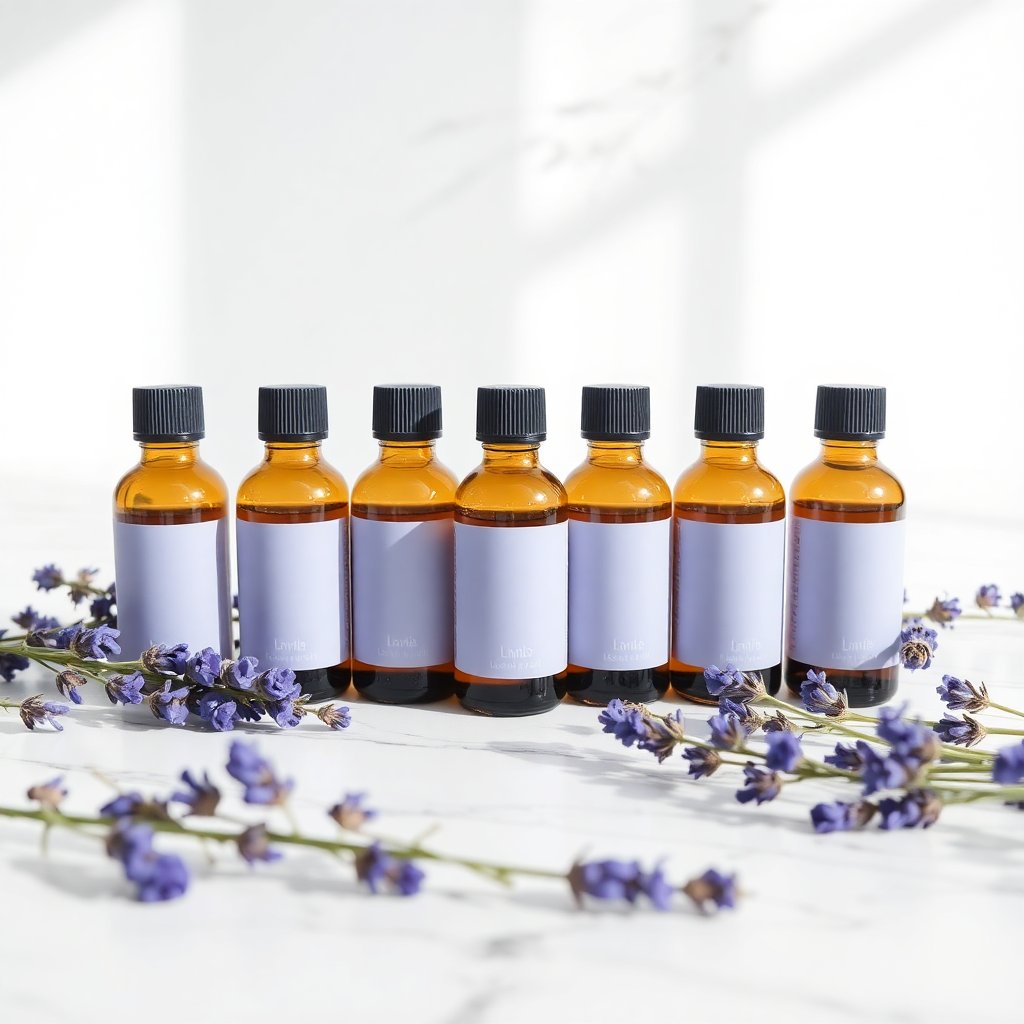
Lavender is where most people start their aromatherapy journey — and for good reason. It's versatile, widely studied, and genuinely works for relaxation and sleep. But the quality gap between brands is enormous, and the marketing language ("therapeutic grade," "100% pure") means almost nothing without third-party testing.
I've spent the last year using lavender oil daily — in my diffuser, in bath salts, in a roller blend I keep on my nightstand — and I've tested seven of the most popular brands. Here's my honest take.
What to Look For
Before the rankings: a few things that actually matter when buying lavender essential oil.
GC/MS Testing. Gas chromatography/mass spectrometry testing verifies that an oil is what it claims to be — the right plant species, the right compound profile, free of adulterants. Reputable brands publish these reports for every batch. If a brand doesn't offer them, that's a red flag.
True lavender vs. lavandin. Lavandula angustifolia is true lavender — softer, sweeter, better for relaxation, with the linalool and linalyl acetate profile associated with anxiety and sleep benefits. Lavandin (Lavandula x intermedia) is a hybrid with a sharper, more camphor-like smell. Neither is "bad," but they're different, and some brands blend them without disclosure.
Country of origin. Bulgarian and French lavender are considered premium. Bulgarian lavender tends to be slightly sweeter; French has a more herbal, classic quality. Both are excellent.
Linalool content. Quality lavender typically contains 25–38% linalool. This is the primary active compound associated with calming and sleep benefits. Low-quality oils often have lower linalool content.
The Rankings
1. Plant Therapy Lavender Bulgari — Best Overall
→ Check current price on Amazon
Consistently excellent. GC/MS reports available on their website for every batch. The scent is clean, true lavender — not sharp, not synthetic, no camphor. Their customer service is genuinely good, and the price is fair for the quality.
Plant Therapy's lavender is sourced from Bulgaria and has the soft, sweet character that makes Bulgarian lavender so valued. The linalool content consistently tests in the 30–36% range — well within premium quality.
Best for: Daily diffusing, sleep blends, bath applications, roller blends. The reliable all-purpose lavender.
2. Rocky Mountain Oils Lavender — Best for Blending
→ Check current price on Amazon
Slightly sweeter than Plant Therapy, with a floral depth that makes it exceptional for custom blends. Also GC/MS tested with published reports. A bit pricier, but worth it if you blend.
Rocky Mountain Oils sources from multiple farms and publishes specific batch reports you can look up by the lot number on your bottle. Their lavender has a more complex profile than most — there's a subtle fruity note underneath the floral that makes blends feel richer.
Best for: Custom blending, creating layered diffuser blends, roller formulas where complexity matters.
3. Edens Garden Lavender Fine — Best Value
→ Check current price on Amazon
Solid quality at a lower price point. The scent isn't quite as refined as Plant Therapy or Rocky Mountain, but it's genuinely pure and works well for diffusing and bath applications.
Edens Garden also publishes GC/MS testing and has a wide variety of lavender options, including French, Bulgarian, and High Altitude varieties. For everyday use or for stocking up, the value per ounce here is hard to beat.
Best for: Budget-conscious buyers, large-batch uses like bath salts or linen spray, everyday diffusing.
4. doTERRA Lavender — Most Recognizable
doTERRA is popular for a reason — their sourcing is excellent and their lavender is high quality. The catch: the MLM distribution model means you're often paying a significant premium over comparable quality oils, and the "CPTG" (Certified Pure Therapeutic Grade) standard is proprietary — not independently verified.
Good oil; questionable value. If you already have a doTERRA relationship or prefer their ecosystem, the lavender is genuinely good. But for the same quality at better prices, Plant Therapy or Rocky Mountain Oils are more straightforward choices.
Best for: Existing doTERRA customers, anyone who values the brand's education and community.
5. Now Foods Lavender — Best Budget Option
→ Check current price on Amazon
Not the most refined, but it's reasonably pure, widely available, and inexpensive. If you're just starting out and want to try diffusing before committing to a premium brand, this works.
Now Foods publishes some testing data but less comprehensively than the top three. The scent has a slightly sharper quality than Bulgarian lavender — more lavandin-adjacent than pure angustifolia. Fine for first-time use; most people eventually move up.
Best for: Beginners, large-volume applications where premium cost is prohibitive.
6. Majestic Pure French Lavender — Solid Middle Ground
→ Check current price on Amazon
Good scent, decent quality, reasonable price. No published GC/MS reports, which puts it below my top three, but I've used it without issues. The French lavender has a slightly more herbal character than Bulgarian — not worse, just different. Works well in bath applications and body care formulas.
Best for: Bath salts, homemade body lotion, applications where you want a more herbal lavender character.
7. ArtNaturals Lavender — Fine for Beginners
Part of their widely sold essential oil set. The quality is consistent but not exceptional — there's a slight synthetic quality to the top note that suggests some adulteration, though it's not egregious. No published batch testing.
Better as a starting point than as a long-term choice. If you received it as a gift or bought the set for variety, use it. Just don't start here if you're buying specifically for therapeutic use.
Best for: Casual use, gift sets, trying aromatherapy for the first time with low investment.
Comparison Table
| Brand | Source | GC/MS Testing | Price Range | Best For | |---|---|---|---|---| | Plant Therapy | Bulgaria | Yes, public | $10–$20 | All-purpose, daily use | | Rocky Mountain Oils | Multiple | Yes, public | $15–$28 | Blending, refined use | | Edens Garden | France/Bulgaria | Yes, public | $8–$16 | Value, large batches | | doTERRA | France/Bulgaria | Proprietary | $28–$40 | Existing customers | | Now Foods | Unspecified | Partial | $8–$12 | Beginners | | Majestic Pure | France | No | $10–$15 | Bath and body | | ArtNaturals | Unspecified | No | $8–$12 | Gift sets, casual use |
How I Actually Use Lavender Daily
In my diffuser each evening, I use 3 drops Plant Therapy lavender + 2 drops cedarwood. It's the combination that my nervous system has come to associate with winding down — Pavlov for sleep, essentially.
The key is consistency. Choose one good oil, use it the same way every evening, and within two weeks your body starts responding before you've even turned on the diffuser.
For topical use, I dilute 3–4 drops in a teaspoon of fractionated coconut oil and apply to my temples and the back of my neck before bed. This is especially effective during periods of elevated stress.
FAQ
What does "therapeutic grade" lavender actually mean? Nothing regulated. "Therapeutic grade" is a marketing term, not an industry certification. Any brand can use it. The only meaningful quality indicator is third-party GC/MS testing with published results — that's what the top three brands on this list provide.
What's the difference between French and Bulgarian lavender? Both are true Lavandula angustifolia, but the flavor/scent profile differs slightly due to growing conditions. Bulgarian tends to be sweeter and more floral. French is slightly more herbal and complex. Both are excellent; personal preference determines which you'll love more.
How much lavender oil should I use in my diffuser? 3–5 drops per 100ml of water is standard. For sleep, slightly less is often better — you want to drift off to the scent, not have it competing for your attention. Start at 3 drops and increase if it's not noticeable.
Can I apply lavender directly to my skin without diluting? Lavender is sometimes cited as one of the few oils safe for "neat" (undiluted) topical use, but this isn't universally recommended. Some people develop sensitization with repeated neat application. 2–3% dilution in a carrier oil is safer for daily use and still fully effective.
How long does a bottle of lavender oil last? True lavender (angustifolia) has a shelf life of 2–3 years when stored correctly — dark glass bottle, cool location, tightly capped. With daily diffusing use (4–5 drops/day), a 30ml bottle lasts roughly 3–4 months. A 100ml bottle of a good brand like Plant Therapy is significantly more economical per use.
Some links on this page are affiliate links. We may earn a small commission if you purchase through them, at no extra cost to you. We only recommend products we've personally used.
As an Amazon Associate we earn from qualifying purchases. This article contains affiliate links; if you buy through them we may earn a small commission at no additional cost to you.