 Aroma Tranquility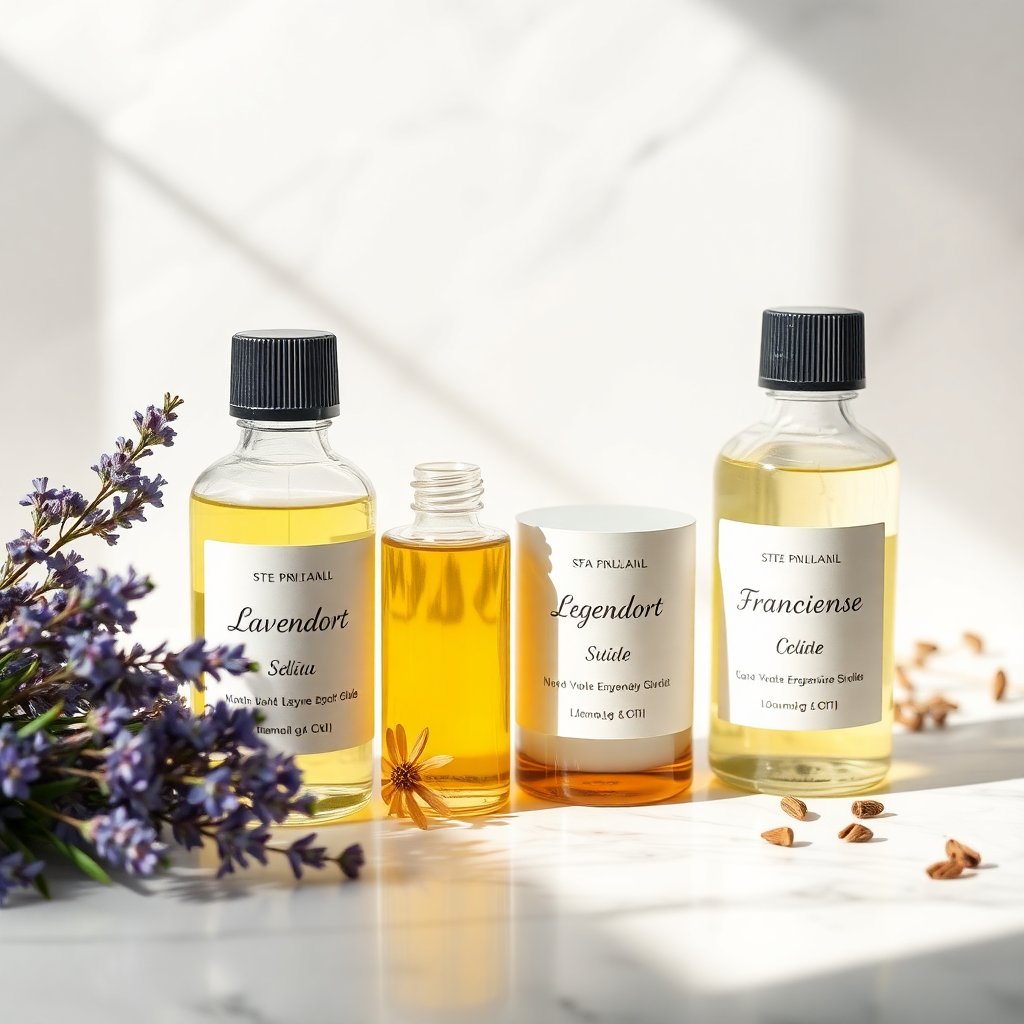
The wellness internet has a complicated relationship with the word "anxiety." Everything is supposed to help: crystals, adaptogens, breathing apps, cold plunges. Some of it is real. A lot of it isn't.
Essential oils occupy an interesting middle ground. There is genuine peer-reviewed research on several of them — and there are also brands making wild claims that cross into pseudoscience. Let me give you the honest version.
Disclaimer: This post is informational and does not constitute medical advice. If you're dealing with significant anxiety, please consult a qualified mental health professional.
What the Research Actually Shows
Lavender is the most studied. Multiple clinical trials have shown it reduces anxiety in pre-operative patients, people with generalized anxiety disorder, and healthy adults under acute stress. Silexan, a standardized lavender oil extract, has been approved in Germany as a pharmaceutical anxiolytic.
Bergamot has demonstrated cortisol-reducing effects in several studies. A 2015 study found that bergamot aromatherapy reduced anxiety and fatigue in a healthcare setting over a 4-week period. Frankincense contains incensole acetate, a compound that affects GABA receptors in ways that may explain its calming properties. Roman chamomile and ylang ylang have smaller but promising research bodies.
None of this replaces professional mental health treatment. But as a daily support practice, the evidence is real.
The Five Worth Using
1. Lavender (Lavandula angustifolia)
The gold standard. Diffuse 4–5 drops in your bedroom 30 minutes before sleep. Or add 2 drops to a warm bath. Or apply a diluted roller blend to your wrists and inhale when you feel your shoulders climbing toward your ears.
The key variable with lavender is quality. True Lavandula angustifolia (sometimes called "fine lavender") is sweeter and more calming than lavandin hybrids, which have a sharper, more camphor-heavy scent. Check that the label specifies the species.
→ Shop Plant Therapy Lavender on Amazon
Plant Therapy Lavender is our consistent recommendation. GC/MS reports published per batch. True L. angustifolia. Fair price.
Best application for anxiety: Diffuse 4 drops in the bedroom starting 30 minutes before bed. Or 2 drops diluted in a teaspoon of carrier oil, applied to wrists and temples.
2. Bergamot (Citrus bergamia)
Bright and citrusy with a floral depth that makes it unlike any other citrus oil. Diffuse during your morning routine or workday. One study found it reduced anxiety in a hospice waiting room — a fairly anxious environment — more effectively than no intervention.
Bergamot is uniquely good for mood elevation combined with calming. Where lavender is primarily sedating, bergamot lifts without overstimulating. It's particularly good for the kind of anxiety that feels like dread or low-level worry — the diffuse, background kind that colors the whole day.
Important note: Bergamot is photosensitizing. If you apply it topically, don't go in the sun for at least 12 hours (or use the FCF — furocoumarin-free — version, which is safe for daytime skin use).
→ Shop bergamot essential oil on Amazon
3. Frankincense (Boswellia sacra or B. carterii)
Slower-acting and deeper. Good for moments when you need to genuinely ground yourself, not just get a quick lift. Add to a diffuser blend with lavender for evening anxiety.
Frankincense has been used for thousands of years in meditative and spiritual practices — and that history makes biological sense. The incensole acetate in frankincense resin affects GABA receptors in the brain in ways that promote calm without sedation. It's grounding in a way that's distinct from lavender.
Use it when anxiety feels activated and uncontrolled — frankincense seems particularly effective for the "spiral" type of anxiety thought.
→ Shop Edens Garden Frankincense on Amazon
4. Roman Chamomile (Anthemis nobilis)
Gentler than lavender but with a distinctive sweet, apple-like scent. Particularly good for anxious children, in bath applications, or as a pillow spray.
Roman chamomile (not to be confused with German chamomile, which is blue and primarily anti-inflammatory) is one of the most calming oils available. The research is thinner than lavender, but the traditional use and anecdotal evidence are consistent.
A few drops on a pillowcase, or in a bath with Epsom salts, is a simple way to use it. It's also one of the gentlest oils for diluted roller blend application.
→ Shop Roman chamomile essential oil on Amazon
5. Ylang Ylang (Cananga odorata)
Floral, sweet, and potent. Use sparingly — too much is overwhelming. In the right amount (1–2 drops with other oils), it's one of the most mood-lifting scents available. Studies show it lowers blood pressure and heart rate.
Ylang ylang works on the nervous system in a measurable way — it's one of the few essential oils with documented effects on cardiovascular markers of stress. In a 2006 study, inhalation of ylang ylang essential oil significantly reduced blood pressure and heart rate while increasing self-esteem and calmness.
It blends beautifully with lavender and frankincense. Start with just 1 drop in a blend — it has a strong top note and can easily overpower subtler oils.
A Simple Anxiety Support Blend
For your diffuser:
- 2 drops lavender
- 2 drops bergamot
- 1 drop frankincense
This combination hits multiple pathways — the citrusy brightness of bergamot, the deep calm of lavender, the grounding resin of frankincense. Use it daily during any period of elevated stress.
For a roller blend (apply to wrists, back of neck, temples):
- 5 drops lavender
- 3 drops bergamot
- 2 drops frankincense
- 10ml fractionated coconut oil (carrier)
This gives you a portable anxiety support blend you can use anywhere.
Comparison Table
| Oil | Primary Effect | Best For | Research Level | |---|---|---|---| | Lavender | Calming, sleep-supporting | General anxiety, sleep issues | Strongest (multiple RCTs) | | Bergamot | Mood-lifting, cortisol-reducing | Daytime anxiety, low mood | Strong | | Frankincense | Grounding, GABA-influencing | Anxious thought spirals, meditation | Moderate | | Roman Chamomile | Gentle calming | Children, sensitive users, baths | Emerging | | Ylang Ylang | Heart rate reduction, mood lift | Acute stress, blood pressure support | Moderate |
How to Use Essential Oils for Anxiety
Diffusion: The most common method. Add 4–8 drops to water in an ultrasonic diffuser and run for 30–60 minutes. This is the method with the most research support — you're inhaling the compounds in therapeutic concentrations.
Topical application (with carrier oil): Dilute 2–3% essential oil in a carrier (fractionated coconut oil or jojoba work well) and apply to pulse points — wrists, temples, back of neck. Do NOT apply essential oils neat (undiluted) to skin except in very specific circumstances; most cause irritation or sensitization at full strength.
Bath: Add 8–10 drops to a tablespoon of carrier oil (or unscented bath gel) before adding to running water. Never add neat essential oils directly to bath water — they don't disperse and can cause skin irritation on concentrated contact.
Inhalation (direct): Cupping your hands around an open bottle and breathing slowly is a quick, acute intervention. Or add a few drops to a cotton ball and place near your workspace.
Buying Tips
Quality matters enormously with essential oils. A cheap lavender from the drugstore may be adulterated with synthetic compounds, lavandin blends, or carrier oils — none of which deliver the therapeutic benefits of pure L. angustifolia.
Look for:
- Published GC/MS batch testing (gas chromatography/mass spectrometry — verifies purity and species)
- Clear species labeling (e.g., Lavandula angustifolia, not just "lavender")
- Country of origin (Bulgarian and French lavender are considered premium)
- Brands that have been around for a while and have transparent sourcing
Reliable brands: Plant Therapy, Edens Garden, Rocky Mountain Oils, Aromatics International. All publish test results and are available on Amazon.
One Honest Caveat
Aromatherapy works best as part of a broader practice — movement, sleep, time outside, human connection. If you're dealing with significant anxiety, please talk to someone. These oils are a support, not a solution.
But as a daily support? They're genuinely worth the shelf space. Many of the same oils that help with anxiety also support deeper, more restful sleep — see our best essential oils for sleep guide for the specific oils and blends that work best at night.
FAQ
How quickly do essential oils work for anxiety? Inhalation produces the fastest results — the olfactory pathway to the limbic system is direct and fast. Many people notice a shift in 5–10 minutes of diffusion. Topical application takes slightly longer (15–30 minutes for systemic effects). Consistent daily use over weeks produces more meaningful baseline changes than any single session.
Can I use multiple anxiety oils at once? Yes — blending is often more effective than single oils. The lavender-bergamot-frankincense blend above is a good starting point. Keep blends simple (3–4 oils) until you understand how they interact.
Are essential oils safe during pregnancy? Many essential oils are not recommended during pregnancy, particularly in the first trimester. Lavender and frankincense in low dilutions are generally considered lower-risk, but you should consult your OB/midwife before using any essential oils therapeutically during pregnancy.
What if the scent makes my anxiety worse? Scent memory is powerful — a smell associated with a stressful memory can trigger anxiety rather than relieve it. If a particular oil doesn't work for you emotionally, switch to something else. There's no single "correct" anxiety oil; find what your nervous system responds positively to.
Should I see a doctor instead of using essential oils? If anxiety is significantly affecting your daily life, yes — please talk to a healthcare professional. Essential oils are a complementary tool, not a substitute for professional mental health care. They're most appropriate as part of a broader wellness routine, not as a primary treatment.
Some links on this page are affiliate links. We may earn a small commission if you purchase through them, at no extra cost to you.
As an Amazon Associate we earn from qualifying purchases. This article contains affiliate links; if you buy through them we may earn a small commission at no additional cost to you.