 Aroma Tranquility
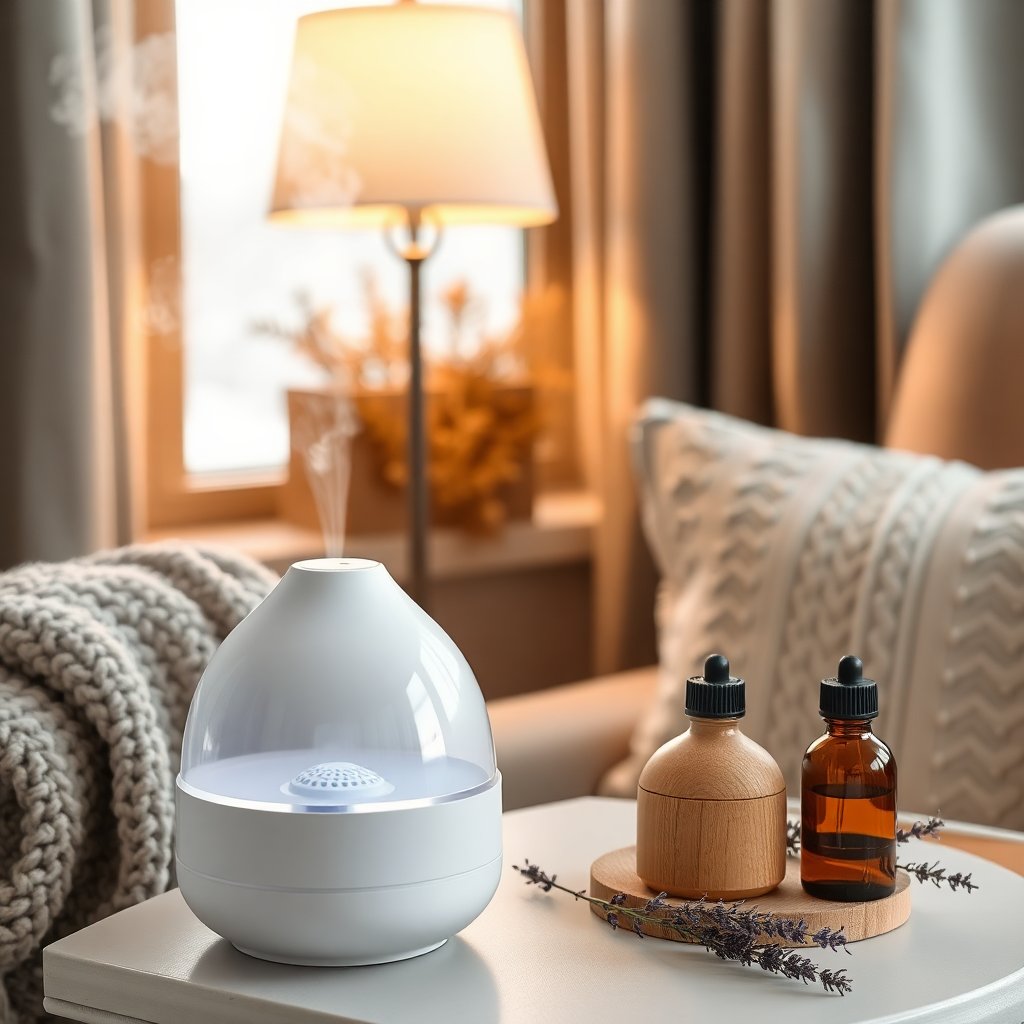
Mid-November is when the heat clicks on and stays on. Within a week or two, a lot of homes feel it: static shocks on the doorknob, a scratchy throat in the morning, dry hands, and houseplants that look a little sad. The obvious fix is a humidifier. And if you already love your diffuser, the obvious next thought is, "Why not just add a few drops of lavender to the humidifier and do both at once?"
The short answer: usually not, unless the humidifier is specifically designed for it. The longer answer is more useful, because there are good ways to get both moisture and scent this winter without ruining a machine or filling your bedroom with something you did not intend.
As an Amazon Associate we earn from qualifying purchases. We do not quote prices because they shift constantly in late November. This guide is general information, not medical advice — talk to your doctor if you have asthma, allergies, or other respiratory conditions, or plan to use oils around babies or pets.
Humidifier vs. Diffuser: They Are Not the Same Machine
They look similar and they both make mist, which is where the confusion comes from.
A humidifier is built to move water. Its job is to raise the relative humidity of a room, often across a large space, for many hours. Tanks are typically one to several liters, and the plastics, wicks, and seals are chosen for water and not much else.
A diffuser is built to move oil. An ultrasonic diffuser uses a small amount of water as a carrier for a few drops of essential oil. The reservoir is small, and the parts that touch the oil are designed to tolerate it. A nebulizing diffuser skips the water entirely. (We cover those in our waterless nebulizing diffuser guide.)
The overlap is real but small. An ultrasonic diffuser does add a little moisture, but not enough to change the feel of a dry bedroom in January. A humidifier adds plenty of moisture, but most are not engineered to have oil in the tank.
Why Most Manufacturers Say No Oils in the Tank
If you check the manual of a typical cool-mist or evaporative humidifier, you will very often see a line warning against adding essential oils, fragrances, or additives to the water. There are a few practical reasons behind that.
Oils can degrade plastics. Concentrated essential oils, especially citrus oils rich in limonene, can soften, cloud, or crack some plastics over time. A humidifier tank sits full for days, so the exposure is much longer than in a diffuser you rinse each evening.
Oil does not mix with water. Essential oils float. In a big tank, they can sit on the surface, coat the inside, and gum up the ultrasonic plate or wick. That shortens the life of the parts that actually make the mist.
Evaporative wicks clog. In evaporative humidifiers, water climbs a wick filter and a fan blows across it. Oil residue can clog that filter and leave a lingering, stale smell.
Warranty issues. Using a machine in a way the manual warns against can void the warranty. That alone is worth a quick look at the manual before you experiment.
Strength is hard to control. A humidifier runs for hours across a large room. A few drops in a one-gallon tank can end up much stronger, or much weaker, than you expect, and you cannot easily dial it back once it is in the water.
The Exceptions: Humidifiers Built for Aromatherapy
Some humidifiers are designed with scent in mind, and these are the right way to combine the two.
Aroma trays and pads
Many cool-mist models include a small aroma tray or felt pad that sits in the mist path, separate from the water tank. You add a few drops to the pad, and the mist carries the scent past it. Oil never touches the tank or the ultrasonic plate. This is the simplest, lowest-risk option if you want light scent with real humidity.
→ Shop humidifiers with essential oil trays on Amazon
Humidifier-diffuser combo units
These are larger ultrasonic machines marketed as both a humidifier and a diffuser. They usually have a dedicated oil compartment or a tank labeled as oil-safe. Read the listing carefully: "works with essential oils" should come from the manufacturer, ideally in the manual, not only from a reviewer.
→ Shop humidifier diffuser combos on Amazon
What to look for in either type
- Auto shut-off when the tank runs dry
- A built-in humidistat or humidity display so you do not over-humidify
- Easy-clean design, with a wide tank opening you can actually reach into
- Quiet operation if it is going in a bedroom
- A separate aroma compartment rather than "just add oil to the water"
How Much Humidity Do You Actually Want?
More is not better. Too much moisture can encourage mold, dust mites, and condensation on windows. The EPA's guidance on using and caring for home humidifiers recommends keeping indoor relative humidity roughly between 30 and 50 percent, cleaning humidifiers regularly, and using distilled or demineralized water to reduce mineral dust.
Get a cheap hygrometer. A small digital humidity monitor takes the guesswork out of it. Many people are surprised to find their "dry" room is already at 40 percent, or that their humidifier has pushed a small bedroom past 60.
→ Shop digital hygrometers on Amazon
Watch the windows. If you see condensation pooling on windowsills in the morning, the room is too humid. Turn the humidifier down or run it for fewer hours.
The Best Winter Setup: Run Both, Separately
For most homes, the cleanest approach is two machines doing two jobs.
Humidifier for the room. Plain distilled water, cleaned on a schedule, set to keep the room in the 30 to 50 percent range.
Diffuser for the scent. A small ultrasonic or nebulizing diffuser on an intermittent setting, run for 30 to 60 minutes at a time rather than all night. Intermittent mode gives you the scent without saturating the room, and it makes your oils last longer.
Place them apart. Keep the diffuser a few feet from the humidifier so the humidifier's mist is not just knocking the scent out of the air near the floor. Elevated surfaces work best for both.
→ Shop small ultrasonic diffusers on Amazon
If your diffuser has been sputtering or not misting since you pulled it out for the season, our troubleshooting guide for diffusers that stop working covers the usual fixes, most of which come down to cleaning the ultrasonic plate.
Winter-Friendly Oils for a Dry-Air Season
If you are using an aroma pad or a dedicated diffuser, these are popular cold-weather choices. None of them treat illness; they are about atmosphere and comfort.
Eucalyptus. Fresh, clean, and strongly associated with winter. Use sparingly; it is potent. Many aromatherapists suggest avoiding it around young children.
Peppermint. Bright and cooling. A drop or two is plenty, and like eucalyptus it is often avoided around small kids.
Lavender. The classic evening oil. Pairs well with a bedroom humidifier for a softer, calmer room before sleep.
Fir, pine, and spruce. Conifer oils smell like the season and blend well with citrus. If that sounds good, our post on holiday conifer blends has recipes.
Sweet orange. Cheerful on gray afternoons. Remember that citrus oils are the hardest on plastics, which is one more reason to keep them out of a humidifier tank.
Frankincense. Warm and grounding, and gentle enough to blend with almost anything.
→ Shop winter essential oil sets on Amazon
Safety Notes for Pets, Kids, and Sensitive Lungs
Scent that drifts with humidifier mist spreads through a room more broadly than a small diffuser, so a little caution goes a long way.
Pets. Cats in particular are sensitive to many essential oils, and birds are more sensitive still. Keep sessions short, ventilate, and make sure pets can leave the room. Our guide to diffuser safety around cats and dogs goes through which oils to avoid.
Babies and young children. Many oils, including eucalyptus and peppermint, are commonly avoided around infants and small children. A plain humidifier with no scent is the safer default in a nursery.
Asthma and allergies. Fragrance can be a trigger for some people. If anyone in the home has a respiratory condition, check with a doctor before scenting shared spaces.
Never add oil to a warm-mist humidifier unless the manual allows it. Warm-mist and steam units heat the water, and adding oil to a heated reservoir is not something to improvise.
Keep the Humidifier Clean (This Matters More Than Scent)
A dirty humidifier can put mold and bacteria into the air, which defeats the purpose. Following the manufacturer's directions and the EPA's general advice:
- Empty and rinse the tank daily instead of topping it off
- Use distilled or demineralized water to cut down on white mineral dust
- Deep-clean every few days, usually with a diluted vinegar soak, then rinse thoroughly
- Replace wick filters on schedule if you have an evaporative model
- Dry it fully before storing it in spring
Never mix cleaning products with essential oils in the tank in an attempt to "freshen" it. Clean first, rinse, then refill with water only.
Frequently Asked Questions
Will a few drops of essential oil ruin my humidifier?
Not necessarily on the first try, but repeated use can damage plastics, clog wicks, and coat the ultrasonic plate. If the manual warns against oils, it is not worth the risk.
Can I put essential oils on the humidifier's filter?
Only if the manufacturer says so. Most evaporative filters are not designed for oil and can clog or smell stale afterward.
Is a humidifier-diffuser combo as good as two separate machines?
For a bedroom or small living space, a good combo unit with a dedicated aroma compartment is convenient. For larger rooms, or if you want stronger scent control, two separate machines usually work better.
Does an ultrasonic diffuser humidify a room?
Slightly. It adds some moisture, but its small tank is not designed to meaningfully raise humidity in a whole room through a dry winter.
The Bottom Line
Moisture and scent are both welcome in a dry November house, but they usually belong in different machines. Use a humidifier with plain distilled water to keep the room comfortable, use a diffuser or a humidifier's dedicated aroma pad for scent, keep humidity in a sensible range, and clean everything more often than feels necessary. Your throat, your skin, and your diffuser will all have a better winter for it.
As an Amazon Associate we earn from qualifying purchases. This article contains affiliate links; if you buy through them we may earn a small commission at no additional cost to you.