 Aroma Tranquility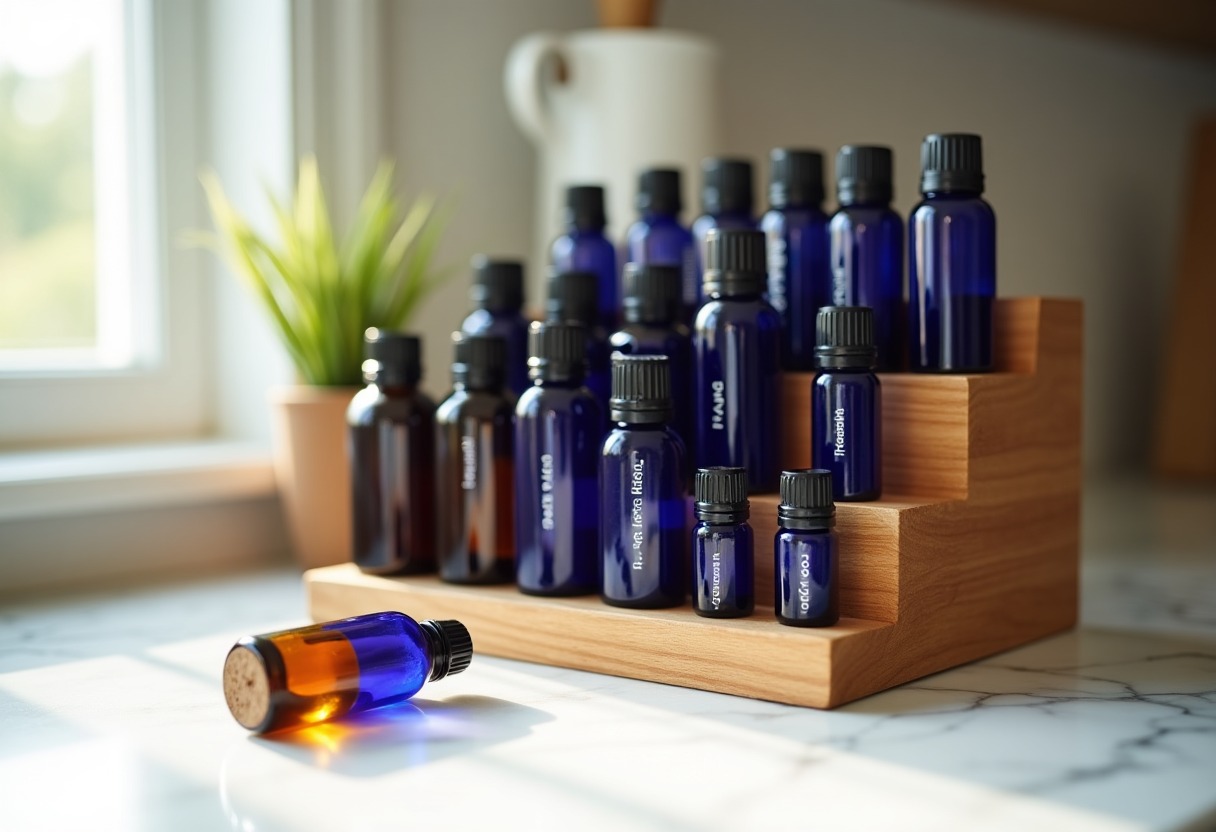
That $30 bottle of frankincense you bought six months ago? It might already be losing its therapeutic compounds if you're storing it wrong. Heat, light, and oxygen degrade essential oils faster than most people realize — sometimes within weeks of opening.
Why Proper Storage Matters More Than You Think
Essential oils contain volatile organic compounds that give them their therapeutic properties. These compounds break down when exposed to heat above 75°F, UV light, or oxygen. A study published by the National Center for Biotechnology Information shows that improper storage can reduce therapeutic compounds by 30-50% within the first year.
Citrus oils deteriorate fastest — bergamot and lemon lose potency within 6-12 months if stored incorrectly. Base notes like sandalwood and patchouli can actually improve with age when stored properly, lasting 5+ years. The difference comes down to three factors: temperature stability, light protection, and air exposure control.
Most commercial essential oil bottles aren't designed for long-term storage. Those clear glass bottles look pretty on a shelf but let in UV light that breaks down molecular structures. The standard 15ml bottles with basic screw caps allow air exchange that oxidizes oils every time you open them.
The Science of Essential Oil Degradation
Essential oil molecules are surprisingly fragile. Monoterpenes — found in high concentrations in citrus oils — oxidize rapidly when exposed to air, creating compounds that smell rancid and lose therapeutic value. Heat speeds this process exponentially. Every 18°F temperature increase roughly doubles the oxidation rate.
Light exposure creates a different problem. UV wavelengths break carbon-hydrogen bonds in essential oil molecules, creating new compounds that can irritate skin or smell off. This photodegradation happens even with artificial light — those bathroom vanity bulbs can damage oils within months.
Humidity affects storage too. Water molecules can react with certain essential oil compounds, especially in oils with high ester content like lavender. This hydrolysis creates alcohols and acids that change the oil's scent profile and reduce its effectiveness for sleep and relaxation purposes.
Temperature fluctuations cause the biggest problems. That spice rack next to your stove might seem convenient, but the daily heat cycles stress oil molecules and accelerate breakdown. Similarly, bathroom storage exposes oils to steam and temperature swings from hot showers.
Creating Your Essential Oil Storage System
Your storage system should protect oils from the four enemies: heat, light, air, and humidity. Start with location. The ideal spot maintains 60-70°F year-round, stays dark, and has low humidity. Think bedroom closets, interior pantry shelves, or dedicated storage cabinets — never kitchens, bathrooms, or cars.
→ Shop essential oil storage boxes on Amazon provide excellent protection when chosen correctly. Look for solid wood construction with tight-fitting lids, not particle board that can off-gas chemicals. Cedar and bamboo naturally repel insects while being chemically neutral.
Transfer oils to proper bottles immediately after purchase. → Shop amber glass bottles on Amazon with tight-sealing caps protect better than original packaging. Amber glass filters 99% of UV light while remaining chemically inert. Choose bottles slightly smaller than your oil quantity to minimize air space — a 10ml oil should go in a 10ml bottle, not a 15ml.
For frequent-use oils, create a rotation system. Keep a small amount in a 2ml travel bottle for daily use, storing the bulk oil sealed in a larger bottle. This limits air exposure to just your working supply. This approach works especially well for oils you use in morning scent rituals or evening sleep blends.
Storage Methods Comparison
| Storage Method | Light Protection | Temperature Control | Air Exposure | Cost | Best For | |---|---|---|---|---|---| | Wooden Storage Box | Excellent (when closed) | Good | Excellent | $$ | Complete collections, long-term storage | | Refrigerator | Poor (light when opened) | Excellent | Good | $ | Citrus oils, opened bottles | | Dark Cabinet | Excellent | Depends on location | Good | $ | Budget option, small collections | | Dedicated Oil Fridge | Excellent | Excellent | Excellent | $$$$ | Professional use, valuable oils |
Refrigeration deserves special mention for citrus oils and opened bottles. Cold storage slows oxidation dramatically — some oils last 3-4 times longer when refrigerated. However, condensation can be problematic when bringing cold bottles to room temperature. Let refrigerated oils equilibrate for 30 minutes before opening to prevent water condensation inside the bottle.
Never store oils in plastic containers long-term. Essential oils dissolve certain plastics, creating contamination and container failure. Even "essential oil safe" plastic bottles should only be used for short-term storage or travel.
Recommended Storage Solutions
A tiered storage approach works best for most aromatherapy enthusiasts. Start with a → Shop wooden essential oil rack on Amazon for daily-use oils. These keep bottles organized and accessible while fitting inside cabinets or closets. Look for racks with individual bottle slots to prevent tipping and include space for 5ml, 10ml, and 15ml bottles.
→ Shop essential oil carrying cases on Amazon solve multiple problems for active users. Quality cases include foam inserts that prevent bottle breakage, hard shells that block light, and compact designs for travel. Some include ice packs for transporting temperature-sensitive oils.
Label everything systematically. → Shop oil bottle labels on Amazon should include the oil name, source company, purchase date, and dilution ratio if pre-mixed. Waterproof labels survive humidity and handling better than standard paper labels.
For serious collectors, consider a wine cooler dedicated to essential oils. These maintain consistent cool temperatures, block light when closed, and have adjustable shelving. Set the temperature to 55-65°F for optimal storage without the condensation risks of regular refrigeration.
Create an inventory system that tracks purchase dates, source suppliers, and usage notes. This helps you rotate stock and identify which oils work best for specific applications like stress relief or focus enhancement.
Advanced Storage Techniques Most People Miss
Nitrogen blanketing extends oil life significantly but requires equipment investment. Small cans of compressed nitrogen (available at homebrew supply stores) can displace oxygen in partially used bottles. Spray nitrogen into the bottle before sealing to create an inert atmosphere that prevents oxidation.
Test your storage effectiveness by keeping small samples exposed to normal room conditions. Compare these "control" samples to properly stored oils every few months. You'll quickly notice scent changes in poorly stored oils while properly stored samples remain consistent.
Consider seasonal storage adjustments. Summer heat affects even interior storage areas. Move your collection to the coolest, most stable area of your home during hot months. Basements often provide ideal conditions if humidity stays controlled.
Create a "first opened" dating system separate from purchase dates. Once opened, even properly stored oils have different shelf lives. Mark opening dates with small dots using different colored permanent markers — one color for each year. This visual system helps you use older opened oils first.
Double-bottle valuable oils. When you purchase expensive oils like rose or melissa, immediately transfer half to a separate sealed bottle for long-term storage. Use one bottle for current needs while keeping a pristine backup for future use.
FAQ
How long do essential oils last when stored properly? Shelf life varies dramatically by oil type and storage quality. Citrus oils (lemon, orange, grapefruit) last 1-2 years maximum, even with perfect storage. Floral oils like lavender and geranium maintain potency for 2-3 years. Wood and resin oils (sandalwood, frankincense, myrrh) can improve with age and last 5+ years when stored correctly. Proper storage means dark, cool (60-70°F), airtight containers with minimal air space.
Should I refrigerate all my essential oils? Refrigeration helps but isn't necessary for all oils. Citrus oils benefit most from cold storage, extending their shelf life from 6-12 months to 18-24 months. Opened bottles of any oil type last longer refrigerated. However, avoid refrigerating oils you use frequently because temperature fluctuations from repeated removal can cause condensation problems. Keep daily-use oils at stable room temperature in dark storage.
What are the signs that an essential oil has gone bad? Rancid or "off" odors are the clearest indicator — oils should smell fresh and true to type. Visual changes include cloudiness in previously clear oils, color shifts (especially darkening), or separation layers. Texture changes like increased thickness or stickiness also indicate degradation. Citrus oils often develop a turpentine-like smell when oxidized. When in doubt, compare the questionable oil to a fresh bottle of the same type.
Can I store different essential oils together in one container? Never mix different essential oils in the same bottle unless creating a specific blend for immediate use. Each oil has different storage requirements and shelf lives. Cross-contamination changes scent profiles and can create unpredictable chemical reactions. Store oils in individual bottles, even when organizing multiple bottles in the same storage box or case. This prevents accidental mixing if bottles leak and maintains the integrity of each oil.
What's the best way to organize a large essential oil collection? Organize by usage frequency first, storage requirements second. Keep daily-use oils in an easily accessible rack or box. Group oils by function — sleep blends, energy blends, cleaning oils — rather than alphabetically. Store citrus oils together in the coldest area since they need refrigeration. Use a simple inventory spreadsheet or app to track purchase dates, suppliers, and usage notes. Label everything clearly with both the oil name and opening date to ensure proper rotation.
Master these storage principles, and your essential oil investment will reward you with consistent potency and therapeutic benefits for years to come.
Some links on this page are affiliate links. We may earn a small commission if you purchase through them, at no extra cost to you.
As an Amazon Associate we earn from qualifying purchases. This article contains affiliate links; if you buy through them we may earn a small commission at no additional cost to you.