 Aroma Tranquility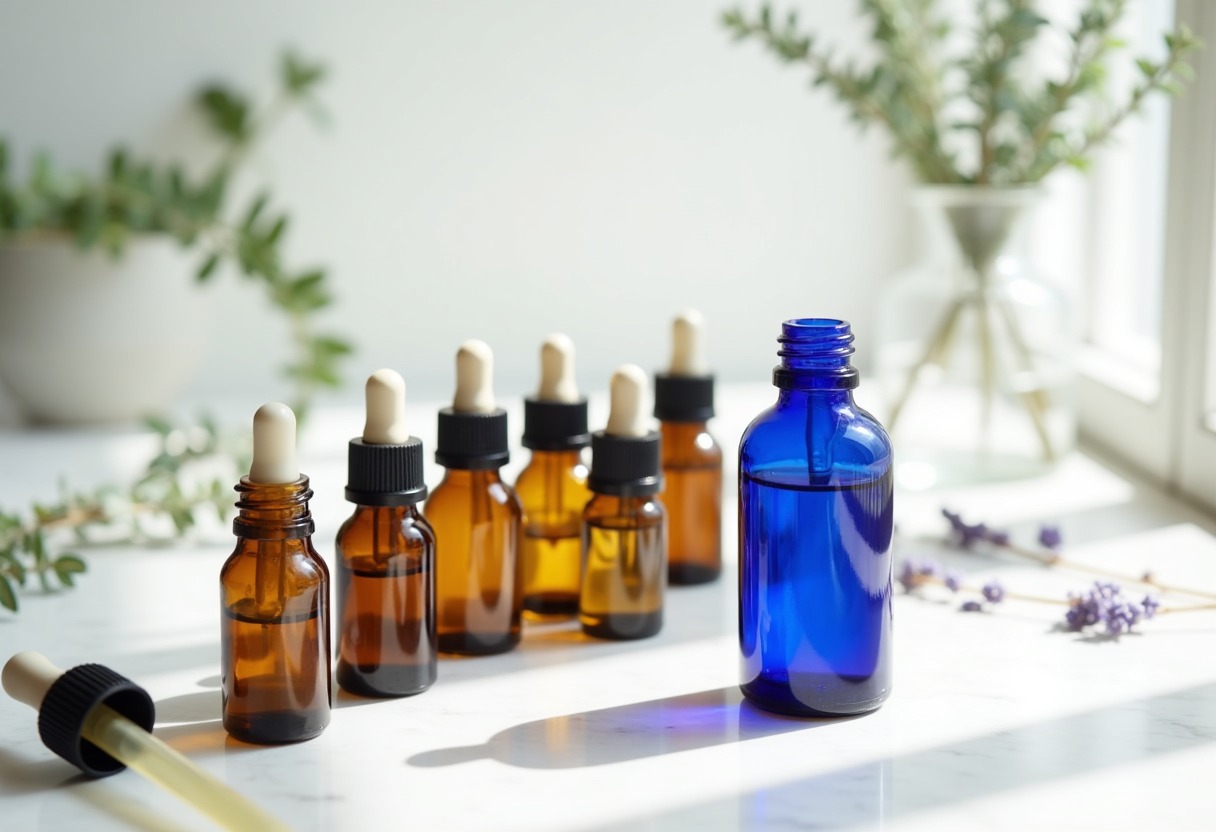
Most people start blending essential oils by mixing whatever smells good together, then wonder why their custom blend smells off or causes skin irritation. Creating harmonious, safe essential oil blends requires understanding scent profiles, proper dilution ratios, and the fundamentals of how different oils interact chemically and aromatically.
Understanding Essential Oil Chemistry and Compatibility
Essential oils contain hundreds of volatile compounds that determine not just their individual scents, but how they combine with others. When you mix bergamot with lavender, the limonene in bergamot enhances lavender's linalool, creating a more rounded, complex fragrance than either oil alone. The National Center for Complementary and Integrative Health emphasizes that understanding these chemical interactions helps prevent adverse reactions and creates more effective therapeutic blends.
The traditional fragrance pyramid structure — top, middle, and base notes — provides the foundation for balanced blends. Top notes (citrus, eucalyptus, peppermint) evaporate quickly and provide initial impact. Middle notes (lavender, geranium, rosemary) form the heart of your blend and last 2-4 hours. Base notes (sandalwood, patchouli, vetiver) anchor the fragrance and can last 6+ hours.
Most successful beginner blends follow a 3:2:1 ratio — three drops of top note, two drops of middle note, and one drop of base note. This creates balance without overwhelming any single component.
Essential Oil Blending Ratios and Safety Guidelines
Safe dilution depends on your intended use and the specific oils in your blend. For topical applications, never exceed 3% dilution for healthy adults — that's 18 drops of essential oil per ounce of carrier oil. → Shop essential oil carrier oils on Amazon like fractionated coconut oil, jojoba, or sweet almond oil provide the best base for skin-safe blends.
Children under 12 require much lower concentrations — 0.5% to 1% maximum. Pregnant women should stay under 1% and avoid certain oils entirely. Phototoxic oils like bergamot, lime, and grapefruit can cause burns with sun exposure, so keep these blends to 0.4% or lower for topical use.
For diffusion, you need much less oil than most people think. Start with 3-6 total drops per 100ml of water in your diffuser. Best Essential Oil Diffusers 2026 can help you choose the right device for your space size and blending experiments.
Scent Profile Categories and Blending Compatibility
Different essential oil families blend naturally together, while others clash or cancel each other out. Understanding these relationships prevents expensive mistakes and creates professional-quality results.
| Scent Family | Best Blending Partners | Avoid Mixing With | Example Combinations | |--------------|----------------------|------------------|---------------------| | Floral (lavender, geranium, ylang ylang) | Citrus, woody, herbal | Heavy spices, strong mints | Lavender + bergamot + sandalwood | | Citrus (lemon, orange, grapefruit) | Floral, herbal, woody, spicy | Other citrus (too one-dimensional) | Sweet orange + rosemary + cedarwood | | Woody (sandalwood, cedarwood, pine) | All families blend well | None (woody oils are universal) | Sandalwood + rose + frankincense | | Herbal (rosemary, thyme, basil) | Citrus, floral, woody | Other herbals without woody base | Rosemary + lemon + juniper |
Mint oils like peppermint and spearmint dominate blends quickly. Use them sparingly — one drop of peppermint can overpower six drops of lavender. Similarly, clove and cinnamon oils are so potent that half a drop often provides enough scent impact.
Essential Oils For Anxiety explores specific calming combinations, while Best Essential Oils For Sleep covers nighttime blends that actually promote rest.
Creating Your First Custom Blends
Start with simple three-oil combinations before attempting complex blends. Choose one oil from each note category, keeping your total under 6 drops for testing. → Shop glass dropper bottles on Amazon let you measure precisely and store your experiments safely.
For a beginner-friendly stress relief blend, try:
- 3 drops sweet orange (top note)
- 2 drops lavender (middle note)
- 1 drop sandalwood (base note)
Mix these in a 10ml roller bottle with fractionated coconut oil for a 3% dilution. This combination works because orange's uplifting limonene compounds complement lavender's calming linalool, while sandalwood's woody undertones ground the blend.
Once you understand how these three interact, experiment with ratios. Try 2:3:1 for a more floral blend, or 3:1:2 for a woodier result. Keep detailed notes — successful aromatherapy blending requires tracking what works and what doesn't.
→ Shop measuring pipettes aromatherapy on Amazon help measure fractional drops accurately, especially important when working with potent oils like clove or oregano.
Essential Oil Blending Equipment and Storage
Professional results require proper tools. → Shop essential oil blending bottles on Amazon in 5ml, 10ml, and 15ml sizes let you create small test batches without waste. Amber or cobalt glass protects your blends from light degradation.
Label everything immediately with contents and date. Essential oil blends change over time — some improve after a few days of aging, while others fade quickly. Store finished blends in cool, dark places away from temperature fluctuations.
For larger batches, use graduated beakers for accuracy. A digital scale that measures to 0.1 gram helps when creating multiple bottles of the same blend. → Shop essential oil blending kit on Amazon often includes multiple bottle sizes, pipettes, and labels in one package.
Clean all equipment between blends using high-proof alcohol or unscented dish soap. Residual oils from previous blends can create off-notes in your next experiment.
Advanced Blending Techniques Most Guides Skip
Perfumers use "accords" — combinations of oils that smell like something entirely different together. Classic rose accord combines geranium, palmarosa, and rose absolute to create a richer rose scent than any single oil. You can apply this principle to create unique signature blends.
Temperature affects how oils blend and how they smell. Cold-blending (mixing oils at room temperature) preserves delicate top notes but may not fully integrate heavier base oils. Gentle warming in a water bath helps dense oils like vetiver or patchouli distribute evenly, but can damage sensitive florals.
The "maceration" technique involves letting your blend rest for 2-4 weeks before final evaluation. Many blends that smell harsh initially develop complexity and smoothness during this aging process. Cover test blends and check them weekly — you'll notice how the scent profile evolves.
Consider seasonal adjustments to your blends. Summer heat amplifies citrus and mint oils, so reduce these by 25% in warm weather formulations. Winter blends can handle more warming spices like ginger or cinnamon that might feel overwhelming in July.
FAQ
What's the maximum number of oils I should use in one blend? Start with 3-5 oils maximum until you understand how they interact. Professional perfumers often use 10+ oils, but they have decades of experience understanding chemical relationships. Complex blends with too many oils often smell muddy or confused. Master simple combinations first, then gradually add complexity. Most effective therapeutic blends use fewer oils at higher concentrations rather than many oils at trace amounts.
Can I mix essential oils directly together without a carrier oil? Yes, you can create concentrated blends by mixing essential oils together in small glass bottles, but these should never be applied directly to skin. Neat essential oil blends work well for diffusion or for diluting later into carrier oils. Always label concentrated blends clearly and store them safely away from children and pets. When making concentrated blends, use the same ratio principles but scale down your quantities significantly.
How do I fix a blend that smells too strong or unbalanced? First, let the blend rest for 24-48 hours — sometimes strong initial impressions mellow. If one note dominates, add small amounts of complementary oils to balance it. For overly floral blends, add citrus or woody notes. For harsh citrus blends, add gentle florals like lavender. If the blend is simply too strong overall, dilute it with more carrier oil rather than trying to mask the intensity with more essential oils.
Why does my essential oil blend smell different after a few days? Essential oils have different volatility rates — top notes evaporate faster than base notes, changing the overall scent profile over time. This is normal and expected. Many blends actually improve after 3-7 days as the oils integrate chemically. However, if your blend develops off-notes like rancid or metallic smells, check that your carrier oil hasn't oxidized and that you're storing the blend properly in a cool, dark place.
What's the difference between therapeutic blending and cosmetic blending ratios? Therapeutic aromatherapy blends typically use higher concentrations (2-5%) and focus on specific wellness goals like Best Essential Oils For Headaches or respiratory support. Cosmetic blends prioritize scent appeal and skin safety, usually staying under 1-2% dilution. Therapeutic blends require more knowledge about contraindications and proper usage, while cosmetic blends focus on fragrance balance and longevity. Always research safety guidelines for your specific intended use before creating any blend.
Professional-quality essential oil blending starts with understanding the science behind scent, respects safety guidelines absolutely, and develops through patient experimentation with proven ratios and techniques.
Some links on this page are affiliate links. We may earn a small commission if you purchase through them, at no extra cost to you.
As an Amazon Associate we earn from qualifying purchases. This article contains affiliate links; if you buy through them we may earn a small commission at no additional cost to you.