 Aroma Tranquility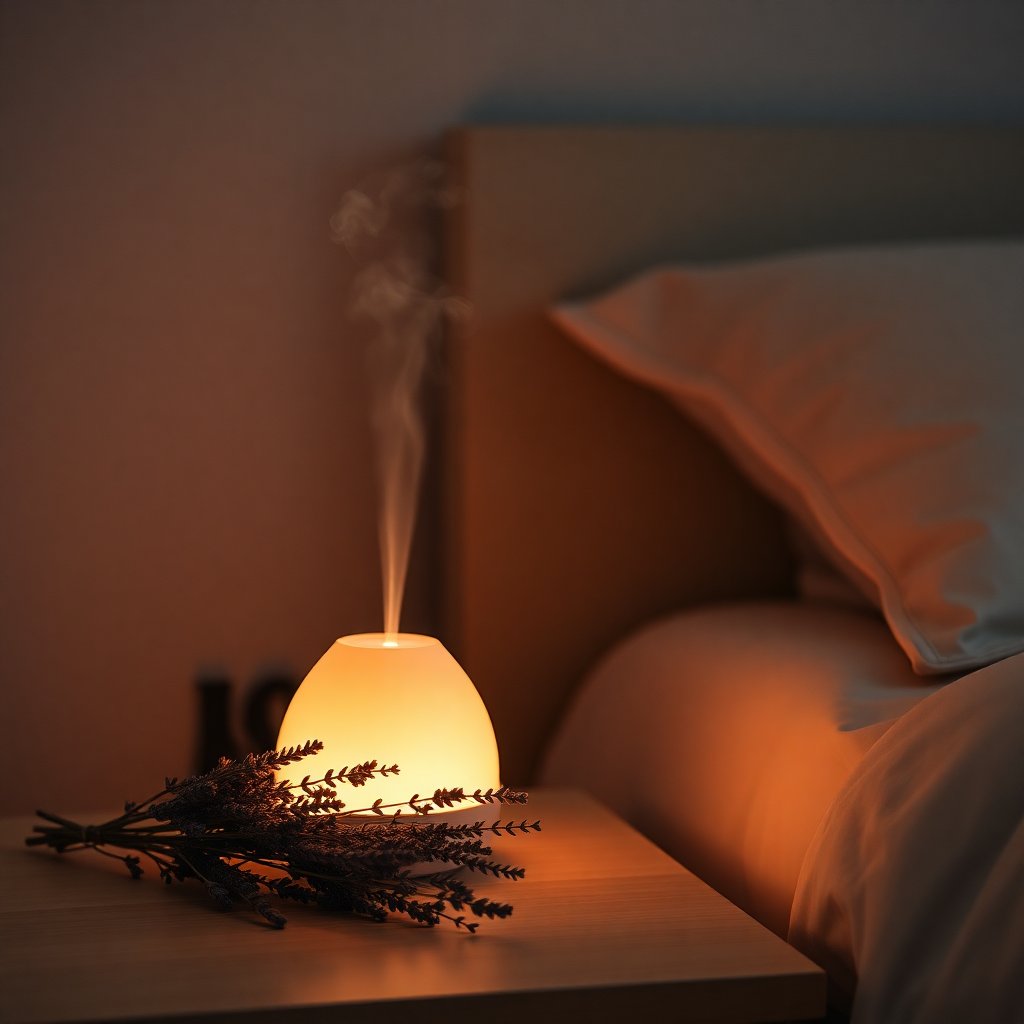
Does Lavender Really Help You Sleep? What a New 2026 Study Says
Every August, the same thing happens. Alarm clocks get set earlier, kids go back to school, and the loose, late-summer rhythm gives way to something more structured. That "back-to-routine" reset is also the moment a lot of people realize their sleep has quietly drifted off the rails — later bedtimes, more screen time, a wind-down that never quite happens.
A fresh piece of research landed at exactly the right time for that reset. In the March/April 2026 issue of Holistic Nursing Practice, researchers published a systematic review and meta-analysis pooling 11 randomized controlled trials covering 628 adults, all testing whether lavender essential oil improves sleep. The headline finding is real, measurable, and — importantly — honest about its own limits. Let's walk through what it actually says, and then build a bedtime ritual you can start tonight.
What the 2026 Meta-Analysis Actually Found
The analysis reported a statistically significant sleep-enhancing effect for lavender essential oil, with a standardized mean difference of −0.56 (95% CI −0.96 to −0.17; P = .005). In plain language: across these pooled trials, people using lavender tended to sleep meaningfully better than those who didn't.
That −0.56 figure lands in what researchers call a moderate effect. It is not a small, dismissible blip — but it is also not a knockout. Lavender is not a sleeping pill, and this study does not claim it is. It suggests lavender can be a helpful nudge toward better rest, especially for people with mild, everyday sleep difficulties rather than a diagnosed disorder.
Just as important is what the authors themselves flagged. They explicitly caution that the result needs confirmation from more high-quality trials. Meta-analyses combine studies of varying size and rigor, and when researchers pooling their own data tell you the evidence is promising but preliminary, that honesty is worth respecting. You can read the study summary directly on PubMed.
So here's the fair takeaway: lavender appears to help, the effect is modest, and the science is still maturing. That is a perfectly good reason to make lavender part of a bedtime routine — and a bad reason to throw out your other sleep habits.
Why Aromatherapy Works Best as a Habit, Not a Cure
Here's the part that often gets lost. The real power of a scent at bedtime may have as much to do with behavior as with chemistry.
Think about how memory and smell are wired together. A consistent scent, used at the same time and in the same context every night, becomes a cue. Over a couple of weeks, your brain starts to associate that specific aroma with winding down. The lavender isn't sedating you into unconsciousness — it's acting as a reliable signal that says the day is over, it's time to rest.
This is why habit-stacking works so well with aromatherapy. You attach the scent to an existing anchor: brush teeth, dim the lights, start the diffuser. Do it in the same order nightly and the ritual itself does a lot of the heavy lifting. That's genuinely useful for a back-to-routine reset, when the whole goal is rebuilding structure your summer schedule quietly dismantled.
If you want to go deeper on which oils have the best track record for rest, our roundup of the best essential oils for sleep breaks down lavender alongside chamomile, cedarwood, and a few others worth keeping on the nightstand.
How to Build a Back-to-Routine Diffuser Ritual
You don't need much. A quality lavender oil, a bedroom diffuser, and a consistent 30-to-60-minute window before sleep are the whole kit. Here's a simple, repeatable framework.
Step 1: Pick a true lavender oil
Look for Lavandula angustifolia (true lavender) on the label rather than lavandin, which has a sharper, more camphor-forward scent that some people find stimulating. A single, clearly labeled bottle beats a mystery "sleep blend" when you're trying to learn what actually works for you.
→ Shop lavender essential oil on Amazon
As an Amazon Associate we earn from qualifying purchases.
Step 2: Diffuse in the bedroom 30–60 minutes before bed
Inhalation and diffusion are the methods the research most commonly tested, and they're the easiest to make routine. Start your diffuser as you begin your wind-down — say, when you head upstairs — and let the scent build gently while you do the rest of your pre-sleep steps. A few drops is plenty; more is not better, and an overpowering room can be counterproductive.
Run it for that 30-to-60-minute window rather than all night. You get the cue and the ambiance without leaving an appliance running unattended for eight hours.
→ Shop an essential oil diffuser for the bedroom on Amazon
Step 3: Add a pillow mist or tissue trick for portability
Not every night is a diffuser night. Traveling, staying with family for a back-to-school weekend, or just too tired to fill a tank? A couple of drops of lavender on a tissue tucked near (not on) your pillow gives you the same scent cue with zero setup.
If you prefer a finished product, a light lavender pillow or linen mist delivers a consistent, pre-diluted spritz. A quick pass over the pillowcase and sheets before you climb in becomes its own satisfying ritual step. If you want to understand how these dilutions are calculated so you can judge a product or blend your own, our essential oil concentration guide covers the math without the jargon.
→ Shop a pillow mist spray bottle on Amazon
→ Shop lavender linen spray on Amazon
Step 4: Keep the rest of your sleep hygiene intact
Lavender is an aid, not a substitute. The scent works best layered on top of the boring fundamentals: a consistent bedtime, a cool dark room, and a screen cutoff. The 2026 study measured lavender as an addition to normal life, not a replacement for good habits — so treat it that way.
If you're weighing a diffuser against a scented candle for that ambiance, we compared the trade-offs in candles vs. diffusers, including the safety differences that matter most at bedtime.
The Safety Note You Shouldn't Skip
Essential oils are concentrated plant compounds, and "natural" does not mean "harmless." A few precautions keep your new ritual genuinely restful.
Keep oils well out of children's reach. This is not a hypothetical. On February 5, 2026, the U.S. Consumer Product Safety Commission announced a recall of about 2,970 bottles of GM Gumili Wintergreen Essential Oil, sold on Amazon, because the packaging was not child-resistant as required — creating a risk of methyl salicylate poisoning if a child swallowed the contents. You can read the CPSC recall notice for the details. The broader lesson applies to every bottle in your home: store oils high, sealed, and away from curious hands.
Never ingest essential oils. Diffusion and topical dilution are the intended uses. Swallowing concentrated oils — wintergreen especially — can be dangerous.
Watch out for your pets. Cats and dogs metabolize these compounds very differently than we do; cats in particular lack an enzyme needed to process phenols, so certain oils can build up to toxic levels. Wintergreen, peppermint, tea tree, citrus, and eucalyptus are among the oils that can be toxic to cats and dogs. When you diffuse, do it in a ventilated space and always give a pet the freedom to leave the room. A closed bedroom with a running diffuser and a cat who can't get out is exactly the scenario to avoid.
None of this should scare you off. It's the same common sense you'd apply to any concentrated household product: read the label, store it safely, and use it as directed.
The Bottom Line
A 2026 meta-analysis in Holistic Nursing Practice gives lavender its best evidence yet for supporting sleep — a moderate, statistically significant effect across 11 trials — while being refreshingly upfront that the science still needs more high-quality confirmation. That's not a reason to expect miracles, and it's a fine reason to make lavender part of a consistent, back-to-routine wind-down.
Build the ritual around inhalation: a few drops in a bedroom diffuser 30 to 60 minutes before bed, a pillow mist when you're on the go, and the same steps in the same order every night so the scent becomes a genuine sleep cue. Keep the oils away from kids and pets, never ingest them, and let the fundamentals of sleep hygiene do their part too.
Do that consistently through the back-to-school reset, and you're giving yourself a low-risk, evidence-supported nudge toward the kind of rest August tends to steal.
As an Amazon Associate we earn from qualifying purchases. This article contains affiliate links; if you buy through them we may earn a small commission at no additional cost to you.