 Aroma Tranquility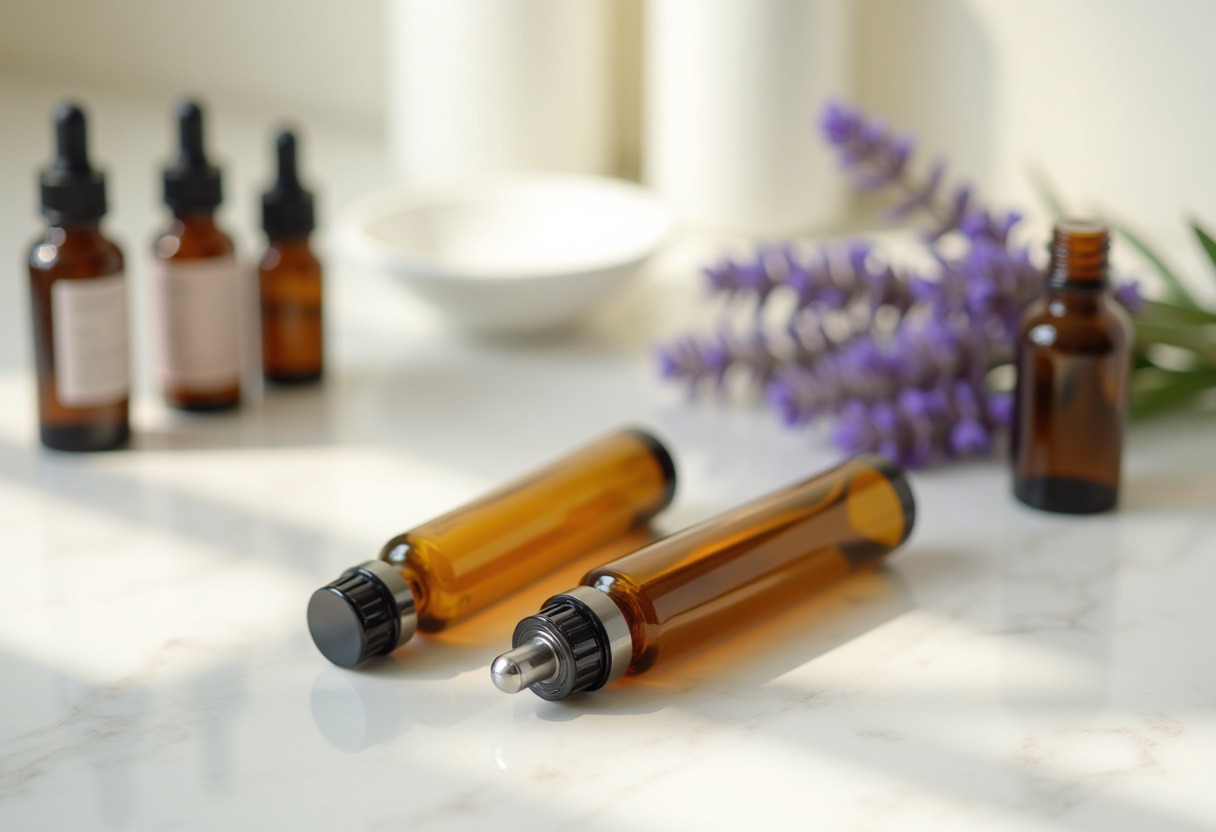
Most skin reactions to essential oils happen because someone applied undiluted peppermint oil straight from the bottle or didn't realize that "natural" doesn't mean "safe at any concentration." Topical application gives you targeted relief and skin benefits, but only when you respect the biology of absorption and follow actual dilution math.
Why Topical Application Works (And Why Dilution Isn't Optional)
Essential oils contain volatile organic compounds small enough to penetrate the skin's lipid barrier and enter local tissue. When properly diluted in a carrier oil, these compounds can provide localized benefits — anti-inflammatory effects for sore muscles, antimicrobial action for minor skin issues, or calming aromatics absorbed through both skin and inhalation during application.
The National Association for Holistic Aromatherapy recommends maximum dilutions of 2-3% for general adult use, which translates to 10-15 drops of essential oil per ounce of carrier oil. Children, elderly individuals, and those with sensitive skin require even lower concentrations. Undiluted application (called "neat" use) can cause chemical burns, sensitization, and permanent allergic responses to specific oil compounds — reactions that don't always appear immediately but develop after repeated exposure.
Your skin absorbs essential oils differently depending on location. The palms and soles have thicker stratum corneum layers, while facial skin, neck, and inner arms absorb compounds more readily. This matters when you're creating essential oil roller blends for different purposes.
Essential Oil Dilution Ratios for Different Uses
Proper dilution protects your skin while delivering therapeutic benefits. Here's the actual math:
| Dilution % | Drops per 1 oz Carrier | Drops per 10ml Roller | Best For | |------------|------------------------|----------------------|----------| | 1% | 5-6 drops | 2 drops | Facial application, sensitive skin, children 6+ | | 2% | 10-12 drops | 4 drops | General daily use, body application, pregnancy (with approved oils) | | 3% | 15-18 drops | 6 drops | Targeted muscle relief, short-term acute issues | | 5% | 25-30 drops | 10 drops | Localized pain, athletic recovery (limited area, short duration) |
Use fractionated coconut oil as your base carrier — it stays liquid at room temperature, absorbs without greasiness, and doesn't oxidize quickly. For detailed guidance on choosing carriers, our Essential Oil Carrier Oils Guide covers absorption rates, shelf life, and skin type matching.
Higher dilutions aren't automatically better. A 2015 study found that lavender at 1% concentration showed comparable skin-calming effects to 5% dilution, with significantly lower irritation risk. More comprehensive information on this topic appears in our Essential Oil Dilution Ratios Safe Aromatherapy Concentrations guide.
Application Methods That Actually Work
Direct massage application remains the most effective topical method. Warm a small amount of diluted oil blend between your palms, then apply to target areas using circular motions. For muscle tension, work along muscle fiber direction with moderate pressure. The combination of aromatics, carrier oil nutrients, and physical manipulation creates synergistic effects.
Roller bottles offer precision and portability. Fill a 10ml essential oil roller bottle with your carrier oil, add drops according to your chosen dilution percentage, cap, and roll to mix. Apply to pulse points, temples, neck, or specific pain areas. Glass rollers preserve oil integrity better than plastic versions.
Compress application works for localized inflammation or skin conditions. Add 5-7 drops of essential oil to a bowl of warm (not hot) water, agitate to disperse, then soak a clean cloth. Wring excess water and apply to affected area for 10-15 minutes. This method suits facial application and areas too sensitive for direct massage.
Bath soaks require proper dispersion to prevent undiluted oil floating on water surface and contacting skin directly. Mix 5-8 drops of essential oil with 1 tablespoon of carrier oil, milk, or unscented castile soap before adding to bathwater. The emulsifier prevents concentrated exposure.
For those who also enjoy diffusion methods, our guide on Best Essential Oil Diffusers 2026 covers inhalation options that complement topical use.
DIY Recipes for Skincare and Muscle Relief
Muscle Recovery Massage Oil (3% dilution)
- 1 oz aromatherapy massage oil base
- 5 drops eucalyptus essential oil
- 4 drops lavender essential oil
- 3 drops peppermint essential oil
- 3 drops rosemary essential oil
Combine in an amber dropper bottle, shake well, apply to sore muscles after exercise or during tension. The menthol in peppermint creates cooling sensation, while lavender modulates inflammation response.
Anti-Inflammatory Joint Blend (2% dilution)
- 10ml roller bottle with fractionated coconut oil
- 2 drops frankincense essential oil
- 1 drop ginger essential oil
- 1 drop turmeric essential oil
Roll onto knees, elbows, or other joint areas twice daily. Frankincense contains boswellic acids that may support normal inflammatory response, though topical penetration to deep joint tissue remains limited.
Calming Facial Serum (1% dilution)
- 1 oz jojoba oil
- 2 drops lavender essential oil
- 2 drops chamomile essential oil
- 1 drop sandalwood essential oil
Apply 3-4 drops to clean, damp skin before bed. Jojoba closely mimics skin's natural sebum, making it ideal for facial application. This concentration is gentle enough for nightly use on most skin types.
Headache Relief Roller (2.5% dilution)
- 10ml roller bottle with sweet almond oil
- 3 drops peppermint essential oil
- 2 drops lavender essential oil
Roll onto temples, back of neck, and forehead at first sign of tension headache. Avoid eye area. For more targeted headache solutions, see Best Essential Oils For Headaches.
Chest Rub for Congestion (2% dilution)
- 2 oz coconut oil (solid at room temp creates balm texture)
- 8 drops eucalyptus essential oil
- 6 drops rosemary essential oil
- 4 drops peppermint essential oil
- 2 drops tea tree essential oil
Melt coconut oil gently, add essential oils, pour into essential oil topical balm container, let solidify. Apply to chest and upper back during respiratory congestion. Never use on children under 6, and reduce concentration to 1% for ages 6-12. Our Best Essential Oils For Congestion guide covers additional relief options.
Safety Practices Most Guides Skip
Patch testing isn't paranoia. Mix your intended dilution, apply a small amount to inner forearm, cover with bandage, and wait 24 hours. Redness, itching, or irritation indicates sensitivity to that specific blend or concentration.
Photosensitive oils require timing awareness. Citrus oils (bergamot, lemon, lime, grapefruit) and some others contain furocoumarins that increase UV sensitivity for up to 12 hours after application. Apply these only to areas that will remain covered, or use them at night. Even cloudy days present phototoxic risk.
Mucous membranes absorb differently. Never apply essential oils inside ears, nose, or near eyes. If accidental contact occurs, flush with plain carrier oil — not water, which spreads oil compounds rather than diluting them.
Sensitization develops over time. You can use an oil safely for months, then suddenly develop allergic response after repeated exposure. If skin reactions appear, discontinue that oil permanently. The immune response typically doesn't reverse.
Storage affects skin safety. Oxidized oils cause more reactions than fresh ones. Check our Essential Oil Shelf Life and Essential Oil Storage guides to prevent degradation that increases irritation potential.
Pregnancy and medical conditions change everything. Some safe oils become contraindicated during pregnancy, while on certain medications, or with specific health conditions. Our Essential Oils Pregnancy Safety guide covers trimester-specific restrictions. Always disclose essential oil use to healthcare providers before surgery or when starting new medications.
The concentration matters more than the oil in most safety scenarios. A 10% dilution of gentle lavender causes more reactions than a 1% dilution of potent oregano. Follow dilution guidelines regardless of an oil's reputation as "safe" or "gentle."
Recommended Products for Topical Application
Quality carriers and containers protect your blends and simplify application. → Shop fractionated coconut oil on Amazon for a base that works in rollers, stays liquid, and suits most skin types.
→ Shop essential oil roller bottles on Amazon in 10ml size with glass construction — plastic roller balls can degrade over time with certain essential oils, while glass maintains blend integrity.
→ Shop amber dropper bottles on Amazon for larger batches of massage oils. The amber glass blocks UV degradation, and dropper tops allow precise dispensing for massage application.
→ Shop aromatherapy massage oil on Amazon if you want pre-blended carrier bases that already combine several beneficial oils like sweet almond, jojoba, and grapeseed.
For gift-giving, these items pair beautifully with essential oil sets — see our Best Gifts Aromatherapy Lovers guide for complete bundle ideas.
FAQ
Can I apply essential oils directly to skin without dilution? Only a few oils are generally recognized as safe for neat application in limited circumstances (lavender on minor burns, tea tree on blemishes), but even these carry sensitization risk with repeated use. Dilution provides the same benefits with dramatically lower reaction rates, making it the smarter default for 99% of applications.
How long do diluted essential oil blends stay effective? Shelf life depends on your carrier oil's oxidation rate — fractionated coconut oil blends last 1-2 years when stored properly, while rosehip or evening primrose blends oxidize within 6-8 months. Add vitamin E oil at 1% to extend stability, and store in dark glass away from heat and light.
What's the difference between topical application and aromatherapy diffusion? Topical application delivers compounds through skin absorption with localized effects and concurrent inhalation, while diffusion works purely through respiratory absorption and has whole-body distribution via bloodstream. For stress management specifically, combining both methods often works best — see Best Aromatherapy Diffusers Stress Relief 2026 for diffusion options.
Can essential oils penetrate deeply enough to affect muscles and joints? Small aromatic molecules can penetrate to superficial muscle layers and create localized anti-inflammatory effects, but they don't reach deep joint spaces or internal organs in therapeutic concentrations. The massage action, increased circulation, and aromatic nervous system response often contribute as much to relief as direct tissue penetration.
Why does the same blend irritate me now when it didn't before? Repeated exposure can trigger sensitization — an immune system response where you develop allergy to specific compounds. Once sensitized, you'll react to that oil at any dilution, possibly for life. Discontinue immediately and consider patch testing other oils in the same chemical family, as cross-reactivity can occur.
Some links on this page are affiliate links. We may earn a small commission if you purchase through them, at no extra cost to you.
Your skin is your largest organ — treat it with the same respect you'd give your digestive system when choosing what goes in your body.
As an Amazon Associate we earn from qualifying purchases. This article contains affiliate links; if you buy through them we may earn a small commission at no additional cost to you.