 Aroma Tranquility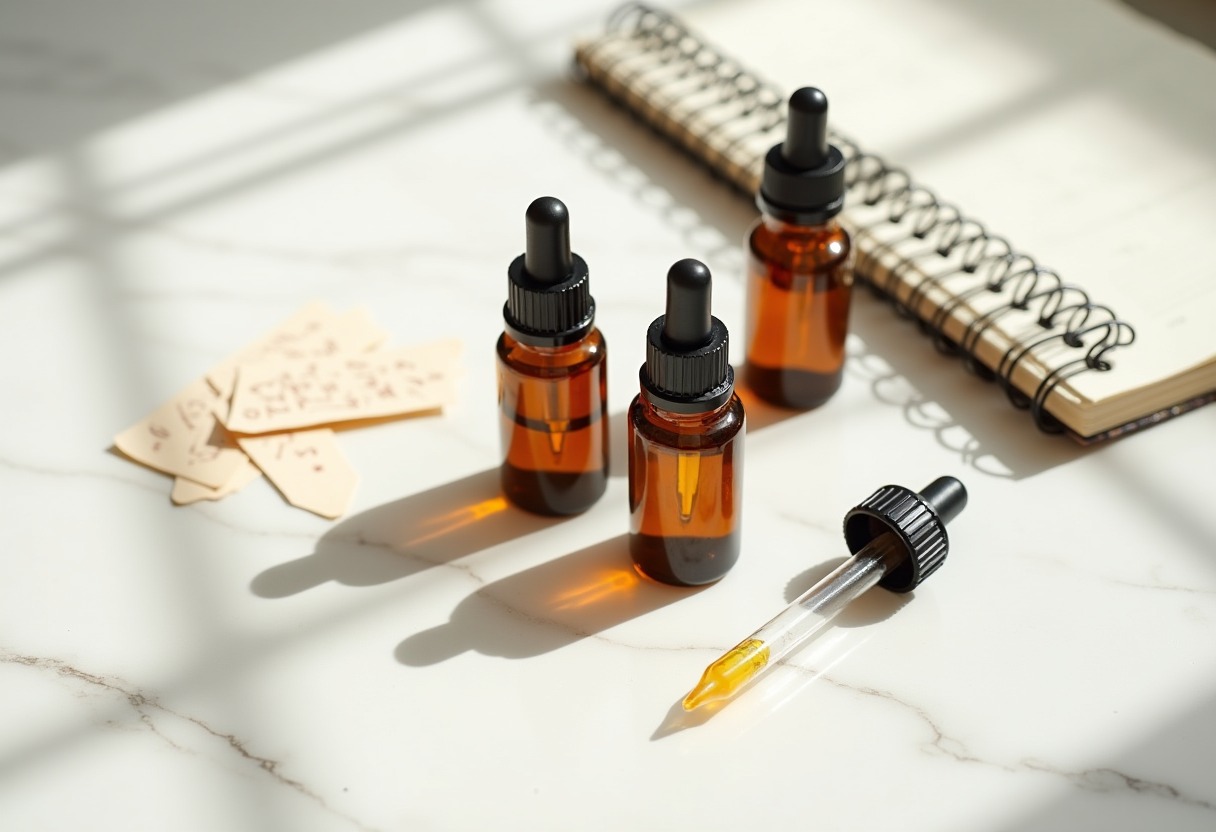
You've bought single oils based on reviews and recommendations, but none quite match what you need — a sleep blend that doesn't smell like a spa, a focus blend without the headache-inducing eucalyptus, or an anxiety relief blend that actually smells pleasant to you. Creating custom essential oil blends puts you in control of both therapeutic effect and scent profile, and the process is more straightforward than most aromatherapy books make it sound.
Why Custom Blending Beats Pre-Made Formulas
Pre-made blends serve a purpose, but they're formulated for mass appeal, not your specific chemistry or preferences. Your skin absorbs compounds differently, your olfactory receptors respond uniquely, and your therapeutic needs shift with seasons, stress levels, and health changes. According to research on aromatherapy perception, individual response to essential oils varies significantly based on genetic factors and previous scent associations.
When you blend your own oils, you control concentration, note balance, and ingredient selection. You can avoid oils that trigger headaches, amplify the ones that work for your body, and adjust ratios as your needs evolve. A custom blend for Best Essential Oils For Sleep might emphasize lavender for you but bergamot for your partner — same goal, different formulation.
The learning curve is shorter than you think. Start with three-oil blends, master dilution ratios, and gradually add complexity. Most people create a working custom blend on their second or third attempt.
Understanding Essential Oil Note Classification
Perfumers and aromatherapists classify oils into top, middle, and base notes based on volatility — how quickly the molecules evaporate and reach your nose. This isn't arbitrary: it affects both immediate scent impact and how long your blend holds together.
Top notes evaporate within 30 minutes to 2 hours. These are your citrus oils (lemon, bergamot, grapefruit), most mints (peppermint, spearmint), and sharp herbaceous oils (eucalyptus, tea tree). They create the first impression, feel bright and energizing, but fade fastest. In therapeutic blends, top notes often address immediate symptoms — congestion, mental fog, nausea.
Middle notes last 2-4 hours and form the heart of your blend. This category includes florals (lavender, geranium, chamomile), some herbs (rosemary, clary sage), and spice oils (black pepper, cardamom). Middle notes bridge the gap between the fleeting top and persistent base, providing both therapeutic depth and scent continuity. For Essential Oils For Anxiety, middle notes often carry the calming compounds.
Base notes linger 5+ hours and anchor your blend. Think woods (cedarwood, sandalwood), resins (frankincense, myrrh), roots (vetiver, ginger), and vanilla-adjacent oils (benzoin). These provide staying power and emotional grounding. Base notes are your fixatives — they slow the evaporation of lighter oils and extend your blend's effectiveness.
A balanced blend typically uses 30% top, 50% middle, and 20% base notes. This ratio ensures immediate impact, sustained effect, and lasting presence. But rules bend based on purpose: a morning wake-up blend might run 50% top notes for punch, while a meditation blend could emphasize 40% base for stability.
The Step-by-Step Blend Formulation Process
Start with clear intention. "I want to feel less anxious" is vague. "I need something to ease the tight-chest feeling during afternoon work stress" gives you direction. Write down your primary goal, secondary benefits, and any oils you know you dislike. This focus prevents the common mistake of throwing too many oils together because they all sound good.
Step 1: Select Your Oils
Choose 3-5 oils maximum for your first custom blends. More ingredients don't equal better results — they muddy both scent and effect. Pick one oil for each note category to start:
- One top note for immediate impact
- One or two middle notes for therapeutic core
- One base note for staying power
If you're creating a blend for Best Essential Oils For Headaches, you might select peppermint (top), lavender (middle), and frankincense (base). Each serves a function: peppermint's cooling effect, lavender's muscle relaxation, frankincense's anti-inflammatory properties.
Step 2: Test Ratios on Paper
Grab → Shop essential oil testing strips on Amazon or cut coffee filters into strips. Place one drop of each oil on separate strips, then hold them together about 6 inches from your nose. Wave them slowly past your nostrils — don't sniff aggressively.
Notice which oils dominate, which recede, and how they interact. Adjust your mental ratio. If the peppermint overwhelms everything, you'll use fewer drops in the final blend. If you can't smell the frankincense, you might increase it or choose a stronger base note.
Step 3: Create Your Test Blend
Work in a → Shop amber glass dropper bottles on Amazon — never clear glass, which accelerates degradation. For your first test batch, work in drops, not milliliters.
Use → Shop pipettes for essential oils on Amazon for accuracy. A standard starting formula for a 10ml blend intended for diffusion:
- 3 drops top note
- 5 drops middle note(s)
- 2 drops base note
This totals 10 drops of pure essential oil. Let it sit for 24-48 hours — oils marry over time, and the initial smell won't match the final blend. Test again after resting. The scent should smooth out, with individual oils less distinct and the overall impression more cohesive.
Step 4: Adjust and Document
If the blend is too sharp, reduce top notes or add a drop of base. Too heavy? More top notes or switch to a lighter middle note. Too subtle? Increase total drop count proportionally.
Write everything down: exact oils, exact drops, date created, and your sensory impressions. Note how it smells immediately versus after 24 hours versus after a week. Track therapeutic effects when you use it. This documentation becomes your personal aromatherapy blend formulation library.
Dilution Ratios for Different Applications
Never use essential oils undiluted on skin, and understand that "therapeutic" doesn't mean "more is better." Proper dilution determines safety, absorption rate, and effectiveness. Our Essential Oil Dilution Ratios Safe Aromatherapy Concentrations guide covers this in depth, but here's the framework for custom blends:
| Application Type | Dilution Percentage | Total Essential Oil | Carrier Oil Amount | Best Use | |-----------------|-------------------|-------------------|------------------|---------| | Facial products | 0.5-1% | 3-6 drops | 30ml (1 oz) | Sensitive skin, daily facial oils, under-eye blends | | Full body massage | 2-3% | 12-18 drops | 30ml (1 oz) | General relaxation, muscle tension, aromatherapy massage | | Targeted relief | 3-5% | 18-30 drops | 30ml (1 oz) | Sore muscles, joint pain, headache temples (spot application only) | | Roll-on blends | 5-10% | 30-60 drops | 30ml (1 oz) | Pulse points, pre-diluted convenience, Best Essential Oil Roller Blends |
For diffuser blends, you're working with undiluted oils, but total amount matters. Most ultrasonic diffusers work best with 3-5 drops total in 100ml water. Your custom 10-drop concentrate gets diluted in water — use 3-5 drops of your concentrate, not 3-5 drops of each oil. Check our Best Essential Oil Diffusers 2026 for specific diffuser capacities.
When creating roller blends or massage oils, choose your carrier thoughtfully. Fractionated coconut oil is neutral and stable. Sweet almond absorbs moderately. Jojoba matches skin sebum closely. Our Essential Oil Carrier Oils Guide explains absorption rates and shelf life for each option.
Recommended Blending Tools and Resources
Quality tools don't make you a better blender, but poor tools create frustrating variables. You need containers that protect your blends, measuring tools that ensure consistency, and references that prevent dangerous combinations.
Essential Supplies:
→ Shop essential oil blending kit on Amazon typically includes amber bottles, pipettes, and labels — enough to start without buying items separately. Look for kits with at least six 10ml bottles and glass pipettes, not plastic.
For serious blending, add an → Shop aromatherapy blending guide book on Amazon to your shelf. Books like "The Complete Book of Essential Oils and Aromatherapy" provide safety data, contraindication lists, and professional formulation ratios that blog posts can't fully cover.
Storage Protocol:
Store your custom blends in dark glass away from heat and light. Label with ingredients, percentages, creation date, and intended use. Essential oils oxidize and degrade — your custom blend has the same shelf life as its shortest-lived component. Check our Essential Oil Shelf Life guide for specific timelines, but assume 6-12 months for most blends.
Keep a master spreadsheet or notebook. Track which combinations worked, which clashed, how ratios shifted scent profiles, and how your nose and body responded. This record shortens your learning curve dramatically.
Advanced Blending Techniques Most Guides Skip
Synergistic pairing matters more than random combination. Some oils amplify each other's therapeutic compounds. Lavender and bergamot both contain linalool and linalyl acetate — blending them creates higher effective concentration of these calming compounds than either oil alone. Black pepper contains beta-caryophyllene that enhances the anti-inflammatory compounds in frankincense.
Seasonal adjustment keeps blends relevant. Your sleep blend might need more grounding base notes in spring (when you're naturally more alert) and more sedating middle notes in winter (when darkness already makes you sluggish). The same theoretical blend works differently across seasons — adjust ratios every few months based on how your body responds.
Scent fatigue is real. You'll stop smelling your favorite custom blend after 2-3 weeks of daily use. This doesn't mean it stopped working — your olfactory receptors adapt. Rotate between two or three custom blends for the same purpose, or take a week off every month. When you return to a blend, it'll smell fresh and potent again.
Trace additions transform blends with barely-there amounts. Adding a single drop of rose absolute or jasmine to a 20-drop blend creates depth without turning your focus blend into a floral perfume. Ylang ylang in tiny amounts (0.5% of total blend) adds honeyed sweetness that softens sharp blends. These trace oils are expensive — use them sparingly for sophisticated results.
For specific health concerns, cross-reference therapeutic research. If you're blending for congestion support, our Best Essential Oils For Congestion post identifies the specific compounds (1,8-cineole in eucalyptus, menthol in peppermint) that provide relief. Build your custom blend around these active components, not just pleasant scents.
Temperature consideration affects diffusion. Warm rooms volatilize top notes faster — your blend will smell different in a 75°F bedroom versus a 65°F office. If you're creating a blend for a specific space, test it there. A blend formulated in your cool basement might smell overwhelmingly strong in your warm living room when used with Best Essential Oil Diffusers Every Room.
FAQ
Can I create custom blends if I'm pregnant or nursing?
Pregnancy requires extra caution with personalized essential oil blends. Avoid oils high in ketones (rosemary, sage, hyssop) and estrogen-mimicking compounds (fennel, clary sage) during pregnancy. Stick to proven-safe oils like lavender, chamomile, and citrus at 1% dilution or less. Our Essential Oils Pregnancy Safety guide covers specific restrictions by trimester.
How do I know if my custom blend is too strong?
Your nose tells you within 30 seconds. If you experience immediate headache, nausea, or throat irritation when sniffing a blend, it's either too concentrated or contains an oil your body rejects. Dilute by half and retest, or remove the offending oil entirely. Proper blends shouldn't cause discomfort — they should feel pleasant even at full strength.
Do I need therapeutic-grade oils for custom blending?
"Therapeutic grade" is marketing language without regulatory meaning, but quality matters. Use pure essential oils without additives, synthetic extenders, or carrier oils pre-mixed. Our Essential Oil Quality Grades Understanding Therapeutic Grade Organic Marketing Claims post explains what quality indicators actually matter: GC/MS testing, botanical names, and country of origin.
How long should I wait before adjusting a blend that doesn't seem to work?
Give any new blend five uses over two weeks before declaring it ineffective. Your body needs time to respond to aromatic compounds, and your nose needs repeated exposure to form accurate impressions. If after two weeks you see no therapeutic benefit or actively dislike the scent, reformulate — but don't judge after one use.
Can I mix custom blends with pre-made essential oil products?
Yes, with awareness. Adding your custom blend to an unscented carrier oil, bath salts, or neutral lotion works well. Mixing your blend into a pre-scented product creates competing fragrance layers that usually smell muddled. If you want to customize a product, choose unscented bases or very lightly scented carriers that complement your blend's note profile.
Your Signature Scent Starts With One Blend
The first custom blend you create won't be perfect, but it'll be yours — formulated for your nose, your body, and your specific need in a way no commercial product ever could.
Some links on this page are affiliate links. We may earn a small commission if you purchase through them, at no extra cost to you.
As an Amazon Associate we earn from qualifying purchases. This article contains affiliate links; if you buy through them we may earn a small commission at no additional cost to you.